Carbon farming: Difference between revisions
CSV import Tags: mobile edit mobile web edit |
CSV import |
||
| Line 46: | Line 46: | ||
{{agriculture-stub}} | {{agriculture-stub}} | ||
{{climate change-stub}} | {{climate change-stub}} | ||
<gallery> | |||
File:SRS1000_being_used_to_measure_soil_respiration_in_the_field..jpg|SRS1000 being used to measure soil respiration in the field | |||
File:Jeju_black_cattle_grazing.JPG|Jeju black cattle grazing | |||
</gallery> | |||
Latest revision as of 00:48, 18 February 2025
Carbon Farming
Carbon farming is a name for a variety of agricultural methods aimed at sequestering atmospheric carbon dioxide into the soil and in crop roots, wood and leaves. By increasing the rate at which plants take in carbon dioxide, carbon farming can help to slow the rate of global warming.
History[edit]
The concept of carbon farming was first proposed in the late 20th century as a response to the growing concern about the effects of greenhouse gases on the planet's climate. The idea is based on the natural process of photosynthesis, in which plants absorb carbon dioxide from the atmosphere and convert it into organic matter.
Methods[edit]
There are several methods of carbon farming, including agroforestry, silvopasture, cover cropping, and organic farming. These methods can be used individually or in combination, depending on the specific needs and conditions of the farm.
Agroforestry[edit]
Agroforestry is a method of farming that involves growing trees and shrubs in combination with crops or pasture. This method can help to sequester carbon in the soil and in the biomass of the trees and shrubs.
Silvopasture[edit]
Silvopasture is a method of farming that involves integrating trees, pasture, and livestock. The trees provide shade for the livestock, while the livestock help to fertilize the soil. This method can help to sequester carbon in the soil and in the biomass of the trees.
Cover Cropping[edit]
Cover cropping is a method of farming that involves planting a crop specifically to cover the soil, rather than for harvest. This can help to prevent soil erosion and increase soil fertility, both of which can help to sequester carbon.
Organic Farming[edit]
Organic farming is a method of farming that avoids the use of synthetic fertilizers and pesticides. This can help to increase soil fertility and sequester carbon.
Benefits[edit]
In addition to helping to mitigate climate change, carbon farming can also provide other benefits. These include improved soil health, increased crop yields, and enhanced farm resilience.
Challenges[edit]
Despite its potential benefits, carbon farming also faces several challenges. These include the need for more research and development, the lack of clear and consistent standards and regulations, and the need for financial incentives to encourage farmers to adopt these practices.
See Also[edit]

This article is a agriculture stub. You can help WikiMD by expanding it!
This climate change related article is a stub. You can help WikiMD by expanding it.
-
 SRS1000 being used to measure soil respiration in the field
 -
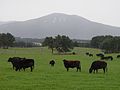 Jeju black cattle grazing


