Binge drinking: Difference between revisions
CSV import |
CSV import |
||
| Line 28: | Line 28: | ||
{{Alcohol-stub}} | {{Alcohol-stub}} | ||
<gallery> | |||
File:PostcardAHappyNewYear1912.jpg|Binge drinking | |||
File:SpongeBorg SquarePants.jpg|Binge drinking | |||
File:Youngmalecomatose.jpg|Binge drinking | |||
File:Hotel Rocamar 2009.jpg|Binge drinking | |||
File:William Hogarth - A Midnight Modern Conversation.jpg|Binge drinking | |||
File:Georg Emanuel Opiz, Der Säufer 1804.jpg|Binge drinking | |||
File:Stonehenge trouble on stones.jpg|Binge drinking | |||
File:William Hogarth - Gin Lane.jpg|Binge drinking | |||
</gallery> | |||
Revision as of 01:40, 20 February 2025
Binge Drinking
Binge drinking is a pattern of alcohol consumption that brings the blood alcohol concentration (BAC) level to 0.08% or more. This pattern of drinking is typically observed in adults over the age of 21 and is often associated with a range of negative health and social consequences.
Definition
The National Institute on Alcohol Abuse and Alcoholism (NIAAA) defines binge drinking as a pattern of drinking alcohol that brings the blood alcohol concentration (BAC) to 0.08% or above. For a typical adult, this pattern corresponds to consuming five or more drinks (male), or four or more drinks (female), in about two hours.
Health Risks
Binge drinking poses significant health risks, including the development of alcohol use disorder, liver disease, cardiovascular disease, stroke, and cancer. It can also lead to poor decision making, risky behavior, and accidents or injuries.
Social and Economic Impact
The social and economic impacts of binge drinking are substantial. These include lost productivity, healthcare costs, crime, and other social problems. Binge drinking can also lead to domestic violence, child neglect and abuse, and absenteeism in the workplace.
Prevention and Treatment
Prevention and treatment of binge drinking involve a combination of public health interventions, policy changes, and individual counseling. These may include alcohol education programs, cognitive behavioral therapy, and medication.
See Also

-
 Binge drinking
 -
 Binge drinking
 -
 Binge drinking
 -
 Binge drinking
 -
 Binge drinking
 -
 Binge drinking
 -
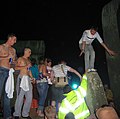 Binge drinking
 -
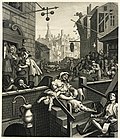 Binge drinking


