Chemical defense: Difference between revisions
CSV import Tags: mobile edit mobile web edit |
CSV import |
||
| Line 42: | Line 42: | ||
{{biology-stub}} | {{biology-stub}} | ||
{{chemistry-stub}} | {{chemistry-stub}} | ||
<gallery> | |||
File:Monarch_Butterfly_Danaus_plexippus_Vertical_Caterpillar_2000px.jpg|Monarch butterfly caterpillar | |||
File:Penicillium_notatum.jpg|Penicillium notatum | |||
File:Chlaenius_Plate_10_Eisner_et_al_1963.png|Chlaenius beetle | |||
File:B-Farnesene.svg|B-Farnesene chemical structure | |||
File:Sponge-spicule_hg.jpg|Sponge spicule | |||
File:Aplysia_californica.jpg|Aplysia californica | |||
File:Skunk_about_to_spray.jpg|Skunk about to spray | |||
File:Golden_Frog_(5819807508).jpg|Golden frog | |||
</gallery> | |||
Latest revision as of 11:48, 18 February 2025
Chemical Defense refers to the use of chemical compounds by organisms to deter predation or competition. It is a survival strategy employed by various species, including plants, insects, and animals. Chemical defense mechanisms are a significant area of study in the fields of ecology, biology, and chemistry.
Overview[edit]
Chemical defense mechanisms are widespread in nature and can be found in a variety of organisms. These mechanisms often involve the production of toxic or noxious chemicals that deter predators or competitors. The chemicals used in these defenses can vary widely, from simple organic compounds to complex biochemical structures.
Types of Chemical Defense[edit]
Autochthonous Chemical Defense[edit]
Autochthonous chemical defense refers to the production of defensive chemicals by the organism itself. This type of defense is common in plants, which produce a wide range of secondary metabolites that can deter herbivores or inhibit the growth of competing plants.
Allochthonous Chemical Defense[edit]
In allochthonous chemical defense, the defensive chemicals are not produced by the organism itself, but are instead obtained from the environment or from the organism's diet. This type of defense is common in insects, which often sequester toxic compounds from the plants they feed on.
Examples of Chemical Defense[edit]
Plants[edit]
Many plants produce toxic or noxious compounds as a defense against herbivores. For example, the foxglove plant produces a compound called digitoxin, which is toxic to most animals.
Insects[edit]
Many insects, such as the monarch butterfly, sequester toxic compounds from the plants they feed on. These toxins make the insects unpalatable to predators.
Animals[edit]
Some animals, such as the skunk, produce noxious chemicals as a defense against predators. The skunk's spray is a well-known example of an animal chemical defense.
See Also[edit]


-
 Monarch butterfly caterpillar
 -
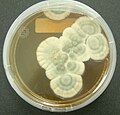 Penicillium notatum
 -
 Chlaenius beetle
 -
 B-Farnesene chemical structure
 -
 Sponge spicule
 -
 Aplysia californica
 -
 Skunk about to spray
 -
 Golden frog


.jpg)
