Animal fiber: Difference between revisions
CSV import Tags: mobile edit mobile web edit |
CSV import |
||
| Line 31: | Line 31: | ||
[[Category:Animal products]] | [[Category:Animal products]] | ||
{{textile-stub}} | {{textile-stub}} | ||
<gallery> | |||
File:Dyed_wool.jpg|Dyed wool | |||
File:Silk_raw_01.jpg|Raw silk | |||
File:Chantier_de_fouilles_à_Morigny-Champigny_en_juin_2012_23.jpg|Animal fiber | |||
File:Monida_and_Yellowstone_Stage_Company_bison_gloves_and_wool_blanket_-_Paugh_Regional_History_Hall_-_Museum_of_the_Rockies_-_2013-07-08.jpg|Bison gloves and wool blanket | |||
File:Handspun_llama_yarn.jpg|Handspun llama yarn | |||
</gallery> | |||
Latest revision as of 11:31, 18 February 2025
Animal fiber refers to any type of fiber derived from an animal source, typically harvested from animals through a process known as shearing. The most common types of animal fiber used in textile production include wool, silk, cashmere, mohair, and alpaca fiber.
Types of Animal Fiber[edit]
Wool[edit]
Wool is the most commonly used animal fiber and is harvested from a variety of animals, including sheep, goats, and rabbits. Wool is known for its warmth and durability, and is used in a variety of products, from clothing to carpets.
Silk[edit]
Silk is a luxurious animal fiber produced by silkworms. It is known for its smooth texture and lustrous appearance. Silk is used in high-end fashion and home decor products.
Cashmere[edit]
Cashmere is a type of wool obtained from cashmere goats. It is finer, softer, and more insulating than sheep's wool, making it highly prized for luxury garments.
Mohair[edit]
Mohair is a silk-like fabric or yarn made from the hair of the Angora goat. It is known for its high luster and sheen, and is often used in fiber blends to add these qualities to other textiles.
Alpaca Fiber[edit]
Alpaca fiber is a type of wool that comes from the alpaca, a species of South American camelid. It is warmer than sheep's wool and hypoallergenic, making it a popular choice for knitwear.
Production Process[edit]
The production process for animal fiber varies depending on the type of fiber and the animal it comes from. However, most animal fibers are harvested through a process known as shearing, where the animal's coat is cut off without causing harm to the animal. The fiber is then cleaned, carded (combed), spun into yarn, and finally woven or knitted into fabric.
Uses[edit]
Animal fibers are used in a wide range of products, from clothing and accessories to home decor items. They are particularly popular in the production of warm clothing items, such as sweaters and scarves, due to their natural insulating properties.
See Also[edit]
-
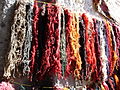 Dyed wool
 -
 Raw silk
 -
Animal fiber
-
Bison gloves and wool blanket
-
Handspun llama yarn


