Leipzig: Difference between revisions
CSV import Tags: mobile edit mobile web edit |
CSV import |
||
| Line 30: | Line 30: | ||
[[Category:University towns in Germany]] | [[Category:University towns in Germany]] | ||
{{Germany-stub}} | {{Germany-stub}} | ||
<gallery> | |||
File:L00_577_Cospudener_See,_Leipzig.jpg|Leipzig | |||
File:2020-09-22_Leipzig_1DX_1467_by_Stepro.jpg|Leipzig | |||
File:Beschwerliche_Radtour.JPG|Leipzig | |||
File:Verwaltung_Leipzig.svg|Leipzig | |||
File:Compass_rose_transparent.png|Leipzig | |||
File:Leipzig_1632.jpg|Leipzig | |||
File:Battle_of_Leipzig_by_Zauerweid.jpg|Leipzig | |||
File:Leipzig_um_1900.jpg|Leipzig | |||
File:Neues_Rathaus_Leipzig_nach1905.jpg|Leipzig | |||
File:Mahnmal_Gedenkinstallation_2021.jpg|Leipzig | |||
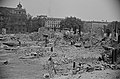
File:Fotothek_df_roe-neg_0002629_002_Trümmerbeseitigung.jpg|Leipzig | |||
File:VölkerschlachtdenkmalLeipzig1.jpg|Leipzig | |||
</gallery> | |||
Revision as of 11:40, 18 February 2025
Leipzig is the most populous city in the federal state of Saxony, Germany. With a population of over 600,000 inhabitants as of 2021, it is Germany's eighth most populous city. Leipzig is located about 160 kilometers (99 miles) southwest of Berlin at the confluence of the White Elster, Pleiße and Parthe rivers at the southern end of the North German Plain.
History
Leipzig has been a trade city since at least the time of the Holy Roman Empire. The city sits at the intersection of the Via Regia and Via Imperii, two important medieval trade routes. Leipzig was once one of the major European centers of learning and culture in fields such as music and publishing. After World War II, Leipzig became a major urban center within the German Democratic Republic (East Germany) but its cultural and economic importance declined.
Economy
Leipzig's economy has traditionally been based on commerce and manufacturing. Today, it is known as a major center for business, learning, and the arts in Germany. The city is home to many major companies, including BMW, Porsche, and DHL.
Culture
Leipzig is known for its vibrant arts and culture scene. It has been a hub for music and the arts for centuries, with a rich history that includes figures like Johann Sebastian Bach, who worked in Leipzig from 1723 until his death in 1750, and the poet and novelist Johann Wolfgang von Goethe, who studied law in Leipzig from 1765 to 1768.
Education
Leipzig is home to one of Germany's oldest universities, the University of Leipzig, which was founded in 1409. The city also has a number of other higher education institutions, including the Leipzig University of Applied Sciences.
Transport
Leipzig has a high-quality infrastructure with an extensive tram network, several motorways and the Leipzig/Halle Airport. The Leipzig Hauptbahnhof is the largest terminal station in Europe.
See also

-
 Leipzig
 -
 Leipzig
 -
 Leipzig
 -
 Leipzig
 -
 Leipzig
 -
 Leipzig
 -
 Leipzig
 -
 Leipzig
 -
 Leipzig
 -
 Leipzig
 -
 Leipzig
 -
 Leipzig


