Piedraia hortae: Difference between revisions
CSV import |
CSV import |
||
| Line 28: | Line 28: | ||
{{Fungi-stub}} | {{Fungi-stub}} | ||
{{Medicine-stub}} | {{Medicine-stub}} | ||
<gallery> | |||
File:Piedraia_hortae.png|Piedraia hortae | |||
File:Piedra_Negra_Micosis.png|Piedra Negra Micosis | |||
File:Timeline_of_World_History.png|Timeline of World History | |||
</gallery> | |||
Revision as of 00:49, 18 February 2025
Piedraia hortae is a species of fungus that is the causative agent of a superficial fungal infection known as Black Piedra. This infection primarily affects the hair shafts of the scalp, body, and pubic hair. Piedraia hortae is a member of the Ascomycota phylum, which is the largest phylum of fungi.
Taxonomy
Piedraia hortae belongs to the Ascomycota phylum, the Eurotiomycetes class, and the Chaetothyriales order. It is the only species in the Piedraia genus. The species was first described by Johann Heinrich Friedrich Link in 1831.
Morphology
Piedraia hortae is a dematiaceous (darkly pigmented) fungus. It produces large, multi-celled, dark brown to black ascospores. The fungus forms fruiting bodies known as ascocarps, which are hard, black, and resemble small stones.
Pathogenicity
Piedraia hortae causes a superficial fungal infection known as Black Piedra. The infection is characterized by the presence of hard, black nodules on the hair shafts. These nodules are the ascocarps of the fungus. Black Piedra primarily affects the hair of the scalp, body, and pubic area. The infection is more common in tropical and subtropical regions.
Treatment
Treatment for Black Piedra typically involves the use of topical or oral antifungal medications. In severe cases, shaving or cutting the affected hair may be necessary.
See also


-
Piedraia hortae
-
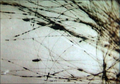 Piedra Negra Micosis
 -
 Timeline of World History


