Juglans nigra: Difference between revisions
CSV import |
CSV import |
||
| Line 26: | Line 26: | ||
{{Tree-stub}} | {{Tree-stub}} | ||
{{NorthAm-tree-stub}} | {{NorthAm-tree-stub}} | ||
<gallery> | |||
File:Black_walnut_tree.jpg|Juglans nigra | |||
File:Black_walnut_fruits_on_the_ground.jpg|Juglans nigra | |||
File:Black_walnut_caterpillars.jpg|Juglans nigra | |||
File:Black_walnut_cracked_open_to_expose_meat.jpg|Juglans nigra | |||
File:2014-10-30_10_16_45_Black_Walnut_foliage_during_autumn_along_Fireside_Avenue_in_Ewing,_New_Jersey.JPG|Juglans nigra | |||
File:Black_Walnuts_(Juglans_nigra)_hulled_and_shelled,_meat_only.jpg|Juglans nigra | |||
File:Hands_after_hulling_500_black_walnuts.jpg|Juglans nigra | |||
File:Juglans_nigra_vs._Juglans_regia_–_shell_comparison.jpg|Juglans nigra | |||
File:S1,_S2,_S3_(3542257521).jpg|Juglans nigra | |||
File:Juglans_nigra_MHNT.BOT.2018.6.22.jpg|Juglans nigra | |||
File:Sauvie_Island_Black_Walnut.jpg|Juglans nigra | |||
</gallery> | |||
Latest revision as of 11:55, 18 February 2025
Juglans nigra, also known as the Eastern Black Walnut, is a species of deciduous tree in the walnut family, Juglandaceae. It is native to eastern North America and is valued for its dense, hard and richly colored wood.
Description[edit]
The Juglans nigra tree typically grows 30–40m tall with a 1–2m trunk diameter. The bark is grey-black and deeply furrowed. The pinnately compound leaves are 30–60cm long, with 15–23 leaflets with the largest leaflets located in the center.
Distribution and Habitat[edit]
Juglans nigra is native to eastern North America, from southern Ontario, west to southeast South Dakota, south to Georgia, northern Florida and southwest to central Texas. It is found in a variety of habitats, including riparian forests, valleys, and slopes.
Uses[edit]
The wood of Juglans nigra is used extensively in the United States for the production of furniture, flooring, and rifle stocks. It is also used in food for its nut. The nuts are edible and are also often used in baking and cooking.
Cultivation[edit]
Juglans nigra is cultivated for its attractive appearance and valuable hardwood. It prefers a deep, fertile soil and a sunny position. The tree is also often grown in North America for its edible nuts.
Conservation[edit]
While Juglans nigra is not currently considered threatened, it has been overharvested in the past for its valuable wood. Conservation efforts are focused on sustainable harvesting and replanting programs.
See also[edit]
This article is a North American tree stub. You can help WikiMD by expanding it!
-
 Juglans nigra
 -
 Juglans nigra
 -
 Juglans nigra
 -
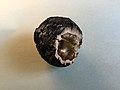 Juglans nigra
 -
 Juglans nigra
 -
Juglans nigra
-
Juglans nigra
-
Juglans nigra
-
Juglans nigra
-
Juglans nigra
-
Juglans nigra


_hulled_and_shelled,_meat_only.jpg)


.jpg)

