Esing Bakery incident: Difference between revisions
CSV import |
CSV import Tags: mobile edit mobile web edit |
||
| Line 21: | Line 21: | ||
{{food-stub}} | {{food-stub}} | ||
{{public health-stub}} | {{public health-stub}} | ||
== Esing_Bakery_incident == | |||
<gallery> | |||
File:Esing_Bakery_Incident_(examination).jpg|Examination of the Esing Bakery incident | |||
File:Thomas_Chisolm_Anstey.jpg|Thomas Chisolm Anstey | |||
File:Commissioner_Yeh.jpg|Commissioner Yeh | |||
File:Henry_John_Temple,_3rd_Viscount_Palmerston.jpg|Henry John Temple, 3rd Viscount Palmerston | |||
File:Sir_John_Bowring.jpg|Sir John Bowring | |||
</gallery> | |||
Latest revision as of 04:36, 18 February 2025
Esing Bakery Incident is a significant event in the history of food safety and public health. It occurred in the early 20th century and had a profound impact on the development of food safety regulations and public health policies.
Background[edit]
The Esing Bakery, located in a major city, was a popular establishment known for its wide variety of baked goods. However, in the year of the incident, several customers reported severe food poisoning symptoms after consuming products from the bakery. This led to an investigation by the local health department, which revealed serious violations of food safety standards.
Incident[edit]
The incident occurred when a batch of pastries sold by the bakery was found to be contaminated with Salmonella, a type of bacteria that causes foodborne illness. Over a hundred people fell ill, and several were hospitalized due to the severity of their symptoms. The source of the contamination was traced back to raw eggs used in the bakery, which had been improperly stored and handled.
Aftermath[edit]
The Esing Bakery Incident led to a public outcry and calls for stricter food safety regulations. In response, the local government implemented new policies to improve food handling practices and prevent similar incidents in the future. These included mandatory food safety training for all food handlers, regular inspections of food establishments, and stricter penalties for violations.
The incident also sparked a wider discussion about public health and the importance of food safety. It highlighted the need for consumers to be aware of the risks associated with foodborne illnesses and the role of government in ensuring food safety.
Legacy[edit]
Today, the Esing Bakery Incident is often cited as a case study in food safety and public health. It serves as a reminder of the potential consequences of neglecting food safety standards and the importance of continuous efforts to improve food handling practices.
The incident also led to significant advancements in food safety regulations and public health policies, many of which are still in place today. These include the introduction of Hazard Analysis and Critical Control Points (HACCP) systems in food establishments and the establishment of the Food and Drug Administration (FDA) to regulate food safety at the national level.

This article is a Public health stub. You can help WikiMD by expanding it!
Esing_Bakery_incident[edit]
-
 Examination of the Esing Bakery incident
 -
 Thomas Chisolm Anstey
 -
 Commissioner Yeh
 -
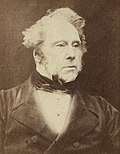 Henry John Temple, 3rd Viscount Palmerston
 -
 Sir John Bowring
.jpg)


