Coaching psychology: Difference between revisions
CSV import |
CSV import |
||
| Line 38: | Line 38: | ||
{{Psychology-stub}} | {{Psychology-stub}} | ||
<gallery> | |||
File:Australian_Psychological_Society_(APS)_logo.jpg|Australian Psychological Society (APS) logo | |||
File:Flickr_-_The_U.S._Army_-_Comprehensive_Soldiers_Fitness_(1)cropped.jpg|Comprehensive Soldiers Fitness | |||
File:Zone_of_proximal_development.svg|Zone of Proximal Development | |||
File:SPACE_model.png|Coaching psychology | |||
</gallery> | |||
Latest revision as of 04:44, 18 February 2025
Coaching Psychology is a field of applied psychology that applies psychological theories and concepts to the practice of coaching. Its aim is to increase performance, achievement and well-being in individuals, teams and organizations by utilising evidence-based methods.
Definition[edit]
Coaching Psychology is defined as the systematic application of behavioral science, which is focused on the enhancement of life experience, work performance and well-being for individuals, groups and organizations who do not have clinically significant mental health issues or abnormal levels of distress.
History[edit]
The field of Coaching Psychology has its roots in Sports Psychology, Organizational Psychology, and Counseling Psychology. It emerged as a distinct discipline in the late 20th century, as a response to the need for a more structured, professional and ethical approach to the growing field of personal and professional coaching.
Theoretical Frameworks[edit]
Coaching Psychology draws on a variety of psychological theories and approaches, including Cognitive Behavioral Therapy (CBT), Positive Psychology, Humanistic Psychology, and Solution-Focused Brief Therapy (SFBT). These theories provide the foundation for the techniques and strategies used in coaching psychology.
Applications[edit]
Coaching Psychology can be applied in a variety of settings, including business, education, health, and personal life. It is used to enhance performance, improve productivity, manage stress, develop leadership skills, and promote overall well-being.
Professional Bodies[edit]
There are several professional bodies that represent coaching psychologists, including the International Society for Coaching Psychology (ISCP), the British Psychological Society's Special Group in Coaching Psychology (SGCP), and the American Psychological Association's Society of Consulting Psychology (SCP).
See Also[edit]
References[edit]
<references />

This article is a psychology-related stub. You can help WikiMD by expanding it!
-
 Australian Psychological Society (APS) logo
 -
 Comprehensive Soldiers Fitness
 -
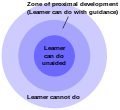 Zone of Proximal Development
 -
 Coaching psychology
_logo.jpg)
cropped.jpg)


