Bibikkan: Difference between revisions
CSV import Tags: mobile edit mobile web edit |
CSV import |
||
| Line 23: | Line 23: | ||
{{Sri Lanka-cuisine-stub}} | {{Sri Lanka-cuisine-stub}} | ||
{{food-stub}} | {{food-stub}} | ||
<gallery> | |||
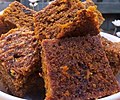
File:Bibikkan.jpg|Bibikkan | |||
</gallery> | |||
Latest revision as of 21:15, 20 February 2025
Bibikkan is a traditional Sri Lankan dessert, primarily made from coconut, semolina, and jaggery. It is a rich, spiced cake, often associated with festive occasions and celebrations.
Ingredients and Preparation[edit]
The main ingredients of Bibikkan are coconut, which is often freshly grated, semolina, and jaggery, a type of unrefined sugar made from the sap of date palm trees or sugarcane. Other ingredients can include cashew nuts, raisins, and a variety of spices such as cardamom, cinnamon, and nutmeg.
The preparation of Bibikkan involves mixing the grated coconut with the jaggery until it forms a paste. The semolina is then toasted and added to the mixture, along with the spices and dried fruits. The mixture is then baked until it becomes a dark, rich cake.
Cultural Significance[edit]
Bibikkan holds a significant place in Sri Lankan culture. It is often prepared for special occasions and celebrations, such as the Sinhalese New Year and Christmas. It is also a popular gift item, often presented to friends and family during festive seasons.
Variations[edit]
While the traditional Bibikkan recipe remains popular, there are several variations of the dessert. Some recipes may include additional ingredients such as vanilla, honey, or treacle. There are also vegan and gluten-free versions of Bibikkan, which substitute traditional ingredients with alternatives to cater to dietary restrictions.
See Also[edit]
This article is a Sri Lanka-cuisine stub. You can help WikiMD by expanding it!

-
 Bibikkan

