Googie architecture: Difference between revisions
CSV import Tags: mobile edit mobile web edit |
CSV import |
||
| Line 28: | Line 28: | ||
[[Category:Post–World War II architecture in the United States]] | [[Category:Post–World War II architecture in the United States]] | ||
{{architecture-stub}} | {{architecture-stub}} | ||
<gallery> | |||
File:NormsRestaurant_LaCienega.JPG|Norms Restaurant on La Cienega | |||
File:Car_Wash,_San_Bernardino,_CA.jpg|Car Wash in San Bernardino, CA | |||
File:Elm_Road_Drive-In_Theatre-2.jpg|Elm Road Drive-In Theatre | |||
File:Burbank_bob's_big_boy_patio_2.jpg|Bob's Big Boy Patio in Burbank | |||
File:Johnnie's_Coffee_Shop_for_Wiki_1.jpg|Johnnie's Coffee Shop | |||
File:Welcome_to_vegas.jpg|Welcome to Las Vegas sign | |||
File:Caribbean_Motel_NJ.JPG|Caribbean Motel in New Jersey | |||
File:JB_Demo_January_2007.jpg|Googie architecture | |||
</gallery> | |||
Latest revision as of 11:26, 18 February 2025
Googie architecture is a form of modern architecture, a subdivision of futurist architecture influenced by car culture, jets, the Space Age, and the Atomic Age. Originating in Southern California during the late 1940s and continuing approximately into the mid-1960s, Googie-themed architecture was popular among motels, coffee houses and gas stations. The style later became widely known as part of the mid-century modern style, elements of which represent the populuxe aesthetic.
Origins[edit]
The term "Googie" comes from a now-defunct coffee shop and café built in West Hollywood designed by John Lautner. Similar architectural styles are also referred to as Doo Wop. The Googie style is a modern take on Futurism with its bold use of glass, steel and neon, and it symbolizes motion, such as boomerangs, flying saucers, atoms and parabolas, and free-form designs such as "soft" parallelograms.
Characteristics[edit]
Googie architecture is characterized by design elements such as upswept roofs, curvaceous, geometric shapes, and bold use of glass, steel and neon. Googie was also characterized by space-age designs that depict motion, such as boomerangs, flying saucers, atoms and parabolas. These stylistic conventions reflected American society's fascination with Space Age themes and marketing trends.
Influence[edit]
Googie architecture influenced the design of buildings such as the Theme Building at Los Angeles International Airport. Beyond the United States, it was influential in Canada, Australia and the Philippines. The style remains popular in some circles of modernist architecture.
Preservation[edit]
Despite its significance in architectural history, many Googie-style buildings face demolition because of the increasing value of the land they occupy. Preservation efforts are being made in areas such as Palm Springs, Los Angeles, and parts of Florida.
See also[edit]
References[edit]
<references />

This article is a architecture-related stub. You can help WikiMD by expanding it!
-
 Norms Restaurant on La Cienega
 -
 Car Wash in San Bernardino, CA
 -
 Elm Road Drive-In Theatre
 -
 Bob's Big Boy Patio in Burbank
 -
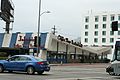 Johnnie's Coffee Shop
 -
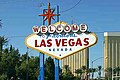 Welcome to Las Vegas sign
 -
 Caribbean Motel in New Jersey
 -
 Googie architecture


