Tibok-tibok: Difference between revisions
CSV import Tags: mobile edit mobile web edit |
CSV import |
||
| Line 24: | Line 24: | ||
{{Philippine-cuisine-stub}} | {{Philippine-cuisine-stub}} | ||
{{food-stub}} | {{food-stub}} | ||
<gallery> | |||
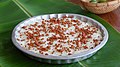
File:Tibok-tibok,_Queen_of_Kapampangan_dessert.jpg|Tibok-tibok, Queen of Kapampangan dessert | |||
</gallery> | |||
Latest revision as of 22:11, 16 February 2025
Tibok-tibok is a traditional Filipino dessert made primarily from carabao's milk. The name "tibok-tibok" is an onomatopoeic term in the Kapampangan that refers to the throbbing heartbeat, which is said to resemble the slow simmering of the dish.
History[edit]
Tibok-tibok is believed to have originated from the province of Pampanga, a region known for its rich culinary tradition in the Philippines. The dessert is a testament to the Kapampangan people's love for rich and creamy dishes.
Preparation[edit]
The main ingredient of tibok-tibok is fresh carabao's milk, which gives the dessert its distinctive rich and creamy taste. Other ingredients include sugar, cornstarch, and latik (a residue of coconut milk), which is used as a topping. The process of making tibok-tibok involves slow cooking and constant stirring to achieve a smooth and velvety texture.
Cultural Significance[edit]
Tibok-tibok is often served during special occasions and festivities in Pampanga and other parts of the Philippines. It is a symbol of Kapampangan hospitality and their penchant for lavish feasts. The dessert is also a popular pasalubong (gift or souvenir) item for visitors.
Variations[edit]
While the traditional tibok-tibok recipe uses carabao's milk, variations of the dessert use cow's milk or coconut milk. Some versions also incorporate flavors such as vanilla or pandan.
See Also[edit]


-
 Tibok-tibok, Queen of Kapampangan dessert

