Yi mein: Difference between revisions
CSV import |
CSV import |
||
| Line 24: | Line 24: | ||
{{Chinese-food-stub}} | {{Chinese-food-stub}} | ||
{{food-stub}} | {{food-stub}} | ||
<gallery> | |||
File:Lobster_with_soup_yi_fu_noodles.jpg|Lobster with soup yi fu noodles | |||
File:Yi_mein_dish_by_peach_yeung.jpg|Yi mein dish by Peach Yeung | |||
File:Cheese_cream_sauce_baked_with_lobster.jpg|Cheese cream sauce baked with lobster | |||
File:A_bags_of_Yi_Fu_noodles_from_Siu_Kee_store.jpg|A bag of Yi Fu noodles from Siu Kee store | |||
File:Shrimp_powder_with_yi_mein_in_chinese_noodles_shop.jpg|Shrimp powder with yi mein in Chinese noodles shop | |||
</gallery> | |||
Latest revision as of 04:25, 18 February 2025
Yi mein (also known as E-fu noodles, Yee-fu noodles, Yi noodles, or Yifu noodles) is a variety of flat Cantonese egg noodles made from wheat flour. They are known for their golden yellow color and chewy characteristics. The noodles are usually sold in a deep-fried form which needs to be softened in water before they can be cooked.
History[edit]
Yi mein was invented in 1963 by the Hong Kong-based noodle manufacturer, Sun Shun Fuk Foods Co. Ltd. The noodles were created to have a longer shelf life and be more convenient for transportation. They quickly gained popularity due to their unique texture and versatility in various dishes.
Preparation and Use[edit]
Yi mein is typically prepared by first soaking the deep-fried noodles in water until they become soft. They are then boiled until they reach the desired level of softness. The noodles can be used in a variety of dishes, including stir-fries, soups, and braised noodle dishes. They are often served at special occasions such as birthdays and weddings, as they symbolize longevity in Chinese culture.
Cultural Significance[edit]
In Chinese culture, yi mein is often associated with longevity and good luck, and is therefore commonly served at celebrations. The long, uncut strands of the noodles symbolize a long life, while the golden color is associated with wealth and prosperity.
See Also[edit]

-
 Lobster with soup yi fu noodles
 -
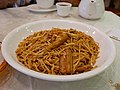 Yi mein dish by Peach Yeung
 -
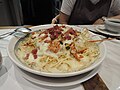 Cheese cream sauce baked with lobster
 -
 A bag of Yi Fu noodles from Siu Kee store
 -
 Shrimp powder with yi mein in Chinese noodles shop


