Slovak cuisine: Difference between revisions
CSV import Tags: mobile edit mobile web edit |
CSV import |
||
| Line 31: | Line 31: | ||
{{European-cuisine-stub}} | {{European-cuisine-stub}} | ||
{{food-stub}} | {{food-stub}} | ||
<gallery> | |||
File:Bryndzové_halušky_so_slaninou.jpg|Bryndzové halušky with bacon | |||
File:Silvestrovska_kapustnica.JPG|New Year's sauerkraut soup | |||
File:Bryndzove_pirohy.jpg|Bryndzové pirohy | |||
File:Kacica.JPG|Roast duck | |||
File:Bravcove_s_milanskou.JPG|Pork with Milanese sauce | |||
File:VianocnaRyba.JPG|Christmas fish | |||
File:RezenPrirodny.JPG|Natural schnitzel | |||
File:Jaternice.jpg|Jaternice | |||
File:Krvavnicka.jpg|Krvavničky | |||
File:SkalickyTrdelnik.JPG|Skalický trdelník | |||
File:Vianočné.jpg|Christmas cookies | |||
</gallery> | |||
Latest revision as of 11:24, 18 February 2025
Slovak cuisine reflects the traditional food habits of the Slovak people. It is influenced by the agricultural produce of the region, as well as the historical and cultural influences of its neighbors.
History[edit]
The history of Slovak cuisine is intertwined with the broader history of Slovakia. The cuisine has been influenced by the various cultures that have inhabited the region, including the Celts, Slavs, Hungarians, and Austrians.
Ingredients[edit]
The main ingredients used in Slovak cuisine are wheat, potatoes, milk and milk products, pork meat, sauerkraut, and onions. The use of these ingredients varies by region.
Dishes[edit]
Some of the most popular dishes in Slovak cuisine include Bryndzové halušky, a dish made of potato dumplings with sheep cheese, and Kapustnica, a soup made from sauerkraut and sausage.
Beverages[edit]
Traditional Slovak beverages include Slivovica, a plum brandy, and Kofola, a soft drink that was developed as a substitute for Coca-Cola during the Communist era.
See also[edit]
References[edit]
<references />
This European cuisine related article is a stub. You can help WikiMD by expanding it.

-
 Bryndzové halušky with bacon
 -
 New Year's sauerkraut soup
 -
 Bryndzové pirohy
 -
 Roast duck
 -
 Pork with Milanese sauce
 -
 Christmas fish
 -
 Natural schnitzel
 -
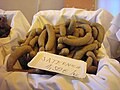 Jaternice
 -
 Krvavničky
 -
 Skalický trdelník
 -
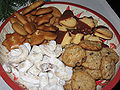 Christmas cookies


