Onigiri: Difference between revisions
CSV import Tags: mobile edit mobile web edit |
CSV import |
||
| Line 24: | Line 24: | ||
{{Japanese cuisine}} | {{Japanese cuisine}} | ||
{{food-stub}} | {{food-stub}} | ||
<gallery> | |||
File:小料理バルさくら_特製おにぎり.jpg|Onigiri | |||
File:NDL-DC_1309950-Utagawa_Hiroshige-東海道五十三次細見図会_藤沢-crd.jpg|Onigiri | |||
File:Onigiri_002.jpg|Onigiri | |||
File:Onigiri_lunch_by_k14_in_Niigata.jpg|Onigiri | |||
File:Rice_balls_of_Seven-Eleven.jpg|Onigiri | |||
File:Onigiri_(34885719823).jpg|Onigiri | |||
File:Onigiri_in_Kyoto_for_sale_March_16_2020_01-54PM.jpeg|Onigiri | |||
File:ラップおにぎり_各種_(35450259103).jpg|Onigiri | |||
File:Yaki-Onigiri_001.jpg|Onigiri | |||
File:Bakudan_onigiri_by_yomi955.jpg|Onigiri | |||
File:Bakudan_onigiri_sectional_by_yomi955.jpg|Onigiri | |||
</gallery> | |||
Revision as of 12:18, 18 February 2025
Onigiri also known as Japanese rice ball is a traditional Japanese food made from white rice formed into triangular or cylindrical shapes and often wrapped in nori (seaweed). Traditionally, an onigiri is filled with pickled ume (umeboshi), salted salmon, katsuobushi, or any other salty or sour ingredient as a natural preservative.
History
The origin of onigiri dates back to the Yayoi period in Japan, where it was used as a quick and convenient food. It was often used as a portable meal during travel or outdoor activities, similar to the way sandwiches are used in Western cultures.
Preparation
Onigiri is made by cooking a specific type of rice, usually Japanese short-grain rice or sushi rice. The rice is then slightly cooled and shaped into a triangle, circle, or cylinder. The shape is typically formed by hand, using a special onigiri mold or a piece of plastic wrap to prevent the rice from sticking to the hands.
The center of the onigiri is often filled with a salty or sour ingredient, which acts as a natural preservative and flavoring. Common fillings include pickled ume (umeboshi), salted salmon, and katsuobushi. The onigiri is then wrapped in a strip of nori, which adds flavor and helps to hold the rice together.
Varieties
There are many varieties of onigiri, which can vary based on the type of rice used, the shape of the onigiri, the type of filling, and the method of preparation. Some popular varieties include:
- Yaki Onigiri: A grilled onigiri, often basted with soy sauce or miso for added flavor.
- Ume Onigiri: An onigiri filled with pickled ume fruit (umeboshi).
- Sake Onigiri: An onigiri filled with salted salmon.
- Katsuobushi Onigiri: An onigiri filled with dried, fermented, and smoked skipjack tuna (katsuobushi).
Cultural Significance
Onigiri holds a significant place in Japanese culture. It is often made at home and packed in lunch boxes (bento). It is also a common item in convenience stores across Japan, where it is packaged in plastic wrap with the nori separate to keep it crisp.
| Japanese cuisine 日本料理 |
|---|
|
|

-
 Onigiri
 -
 Onigiri
 -
 Onigiri
 -
 Onigiri
 -
 Onigiri
 -
 Onigiri
 -
 Onigiri
 -
 Onigiri
 -
 Onigiri
 -
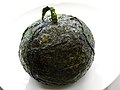 Onigiri
 -
 Onigiri


.jpg)

.jpg)


