Blanquette de veau: Difference between revisions
CSV import |
CSV import |
||
| Line 27: | Line 27: | ||
{{French cuisine}} | {{French cuisine}} | ||
{{food-stub}} | {{food-stub}} | ||
<gallery> | |||
File:Blanquette_de_veau_à_l'ancienne_04.jpg|Blanquette de veau à l'ancienne | |||
File:Hannah-Glasse-Blanquette.png|Hannah Glasse Blanquette | |||
</gallery> | |||
Latest revision as of 21:27, 20 February 2025
Blanquette de Veau is a classic French dish that is known for its creamy, white sauce. The name "blanquette" comes from the French word "blanc," which means white, referring to the color of the sauce. The dish is traditionally made with veal, but can also be made with other types of meat.
History[edit]
The origins of Blanquette de Veau are somewhat unclear, but it is believed to have originated in the Lyon region of France. It is a traditional dish that has been passed down through generations and is a staple in many French households.
Preparation[edit]
The preparation of Blanquette de Veau involves several steps. First, the veal is simmered in a broth with aromatics such as onions, carrots, and herbs. The meat is then removed from the broth, and a roux is made with butter and flour. The broth is added to the roux to create a thick, creamy sauce. The veal is then returned to the sauce and simmered until tender. The dish is typically served with rice or potatoes.
Variations[edit]
While veal is the traditional meat used in Blanquette de Veau, other meats can be used as well. For example, Blanquette de Porc is a variation made with pork, and Blanquette de Poulet is made with chicken. Additionally, some versions of the dish may include mushrooms or other vegetables.
Cultural Significance[edit]
Blanquette de Veau is considered a comfort food in France and is often served at family gatherings and special occasions. It is also a popular dish in French restaurants around the world.
See Also[edit]
| French cuisine | ||||||||||
|---|---|---|---|---|---|---|---|---|---|---|
This French cuisine related article is a stub.
|

-
 Blanquette de veau à l'ancienne
 -
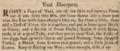 Hannah Glasse Blanquette


