Botifarra: Difference between revisions
CSV import |
CSV import |
||
| Line 30: | Line 30: | ||
{{sausage-stub}} | {{sausage-stub}} | ||
{{Spain-food-stub}} | {{Spain-food-stub}} | ||
<gallery> | |||
File:Grilled_sausages.jpg|Grilled sausages | |||
File:Butifarra_blanca.jpg|Butifarra blanca | |||
File:Butifarra_negra.jpg|Butifarra negra | |||
File:Barranquilla_Butifarras.jpg|Barranquilla Butifarras | |||
</gallery> | |||
Latest revision as of 04:34, 18 February 2025
Botifarra is a type of sausage and one of the most important dishes of the Catalan cuisine. The term "Botifarra" is derived from the Latin word "botulus," meaning sausage.
History[edit]
The origins of Botifarra date back to the Roman Empire, when it was introduced to the Iberian Peninsula. The sausage has been a staple in Catalan cuisine since the Middle Ages.
Preparation[edit]
Botifarra is typically made from pork, including lean pork and pork fat. The meat is minced and mixed with spices, often including black pepper, salt, and sometimes nutmeg or clove. The mixture is then stuffed into a casing made from the pig's intestines.
There are many variations of Botifarra, including Botifarra d'ou, which includes eggs, and Botifarra negra, which includes pig's blood.
Consumption[edit]
Botifarra is often grilled or roasted and served with white beans. It is also used in a variety of dishes, such as Botifarra amb mongetes, a traditional Catalan dish where the sausage is served with white beans.
Cultural Significance[edit]
Botifarra is more than just a food item in Catalonia. It is a symbol of Catalan identity and tradition. The sausage is often served at festivals and celebrations, and there are even competitions for the best Botifarra.
See Also[edit]


-
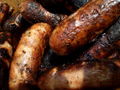 Grilled sausages
 -
 Butifarra blanca
 -
 Butifarra negra
 -
 Barranquilla Butifarras


