Dinuguan: Difference between revisions
CSV import |
CSV import |
||
| Line 23: | Line 23: | ||
{{Philippine-cuisine-stub}} | {{Philippine-cuisine-stub}} | ||
{{food-stub}} | {{food-stub}} | ||
<gallery> | |||
File:Dinuguan_and_Puto.jpg|Dinuguan and Puto | |||
File:Dinuguan_with_puto.jpg|Dinuguan with Puto | |||
File:Dinuguan_and_Tuyo.jpg|Dinuguan and Tuyo | |||
File:Dinuguan_Ingredients.jpg|Dinuguan Ingredients | |||
File:Combine_Pork_and_Garlic.jpg|Combine Pork and Garlic | |||
File:Addition_of_Blood_and_Other_Ingredients.jpg|Addition of Blood and Other Ingredients | |||
File:Simmering_Dinuguan.jpg|Simmering Dinuguan | |||
File:Tinumis.jpg|Tinumis | |||
File:Paleo_Dinuguan.jpg|Paleo Dinuguan | |||
</gallery> | |||
Latest revision as of 11:30, 18 February 2025
Dinuguan is a traditional Filipino stew made primarily from pork blood, pork offal, and vinegar. The dish is often served with rice or a Filipino steamed rice cake known as Puto. The name "Dinuguan" comes from the Filipino word "dugo," meaning blood.
History[edit]
The origins of Dinuguan can be traced back to the pre-colonial era in the Philippines. The dish was a way for Filipinos to utilize all parts of the pig, ensuring that nothing went to waste. The use of vinegar as a primary ingredient is also a common practice in Filipino cuisine, as it helps to preserve the food.
Preparation[edit]
The preparation of Dinuguan involves simmering pork blood, pork offal (such as lungs, kidneys, intestines, ears, heart and snout), and meat in vinegar and spices. The dish is typically seasoned with chili, garlic, onions, and oregano. Some variations of the dish may also include coconut milk for a richer flavor.
Variations[edit]
There are several regional variations of Dinuguan throughout the Philippines. In the Visayas region, for example, Dinuguan is often cooked with coconut milk, a variant known as Dinuguan at Puto. In the Ilocos region, a version of the dish known as "Dinardaraan" is drier and has a crunchier texture.
Cultural Significance[edit]
Dinuguan is a staple in Filipino celebrations and gatherings. It is often served during fiestas, birthdays, and other special occasions. The dish is also a common offering during All Souls' Day, a tradition believed to help guide the souls of the departed.
See Also[edit]


-
 Dinuguan and Puto
 -
 Dinuguan with Puto
 -
 Dinuguan and Tuyo
 -
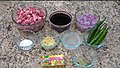 Dinuguan Ingredients
 -
 Combine Pork and Garlic
 -
 Addition of Blood and Other Ingredients
 -
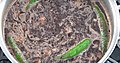 Simmering Dinuguan
 -
 Tinumis
 -
 Paleo Dinuguan


