Universe: Difference between revisions
CSV import |
CSV import |
||
| Line 1: | Line 1: | ||
== Universe == | |||
The ''' | The '''universe''' is the totality of space, time, matter, and energy. It encompasses everything that exists, from the smallest subatomic particles to the largest galaxies. The universe is governed by the laws of physics and is constantly expanding. | ||
== | == Origin and Evolution == | ||
The | The prevailing cosmological model for the origin of the universe is the [[Big Bang theory]]. According to this theory, the universe began approximately 13.8 billion years ago from an extremely hot and dense state and has been expanding ever since. The [[cosmic microwave background]] radiation is a remnant of the early universe, providing evidence for the Big Bang. | ||
== | === Structure === | ||
The | The universe is composed of galaxies, which are collections of stars, gas, dust, and dark matter. These galaxies are organized into clusters and superclusters, forming a vast cosmic web. The [[Milky Way]] is the galaxy that contains our [[Solar System]]. | ||
== | === Composition === | ||
The | The universe is made up of ordinary matter, dark matter, and dark energy. Ordinary matter includes atoms and molecules, while dark matter is a mysterious substance that does not emit light but exerts gravitational forces. Dark energy is thought to be responsible for the accelerated expansion of the universe. | ||
== | == Theories and Models == | ||
The | Several models attempt to describe the universe's structure and behavior. The [[Standard Model of particle physics]] explains the fundamental particles and forces, while [[general relativity]] describes the gravitational interaction on a cosmic scale. The [[Lambda-CDM model]] is the standard model of cosmology, incorporating dark energy and cold dark matter. | ||
== | == Future of the Universe == | ||
The ultimate fate of the universe is still uncertain. Several scenarios have been proposed, including the [[Big Freeze]], [[Big Crunch]], and [[Big Rip]]. These outcomes depend on the properties of dark energy and the overall density of the universe. | |||
== Related Pages == | |||
* [[Cosmology]] | |||
* [[Galaxy]] | |||
* [[Dark matter]] | |||
* [[Dark energy]] | |||
* [[Big Bang]] | * [[Big Bang]] | ||
== References == | == References == | ||
* Peebles, P. J. E. (1993). ''Principles of Physical Cosmology''. Princeton University Press. | |||
* Weinberg, S. (2008). ''Cosmology''. Oxford University Press. | |||
== | == Gallery == | ||
<gallery> | |||
File:Hubble_ultra_deep_field.jpg|Hubble Ultra Deep Field | |||
File:NASA-HubbleLegacyFieldZoomOut-20190502.webm|Hubble Legacy Field Zoom Out | |||
File:CMB_Timeline300_no_WMAP.jpg|CMB Timeline | |||
File:Extended_universe_logarithmic_illustration_(English_annotated).png|Logarithmic Illustration of the Universe | |||
File:End_of_universe.jpg|End of the Universe | |||
File:Formation_of_galactic_clusters_and_filaments.jpg|Formation of Galactic Clusters | |||
File:Nearsc.gif|Near-Infrared Sky | |||
File:Universe_content_bar_chart.svg|Universe Content Bar Chart | |||
File:Standard_Model_of_Elementary_Particles.svg|Standard Model of Elementary Particles | |||
File:Aristarchus_working.jpg|Aristarchus of Samos | |||
File:Flammarion.jpg|Flammarion Engraving | |||
File:ThomasDiggesmap.JPG|Thomas Digges' Map | |||
File:The_Earth_seen_from_Apollo_17.jpg|The Earth from Apollo 17 | |||
File:Solar_System_true_color.jpg|Solar System in True Color | |||
File:RadcliffeWave1.png|Radcliffe Wave | |||
File:Milky_Way_Arms_ssc2008-10.svg|Milky Way Arms | |||
File:Artist's_impression_of_the_Milky_Way_(updated_-_annotated).jpg|Artist's Impression of the Milky Way | |||
File:Local_Group_and_nearest_galaxies.jpg|Local Group and Nearest Galaxies | |||
</gallery> | |||
[[Category:Cosmology]] | |||
[[Category:Universe]] | [[Category:Universe]] | ||
Latest revision as of 01:11, 10 February 2025
Universe[edit]
The universe is the totality of space, time, matter, and energy. It encompasses everything that exists, from the smallest subatomic particles to the largest galaxies. The universe is governed by the laws of physics and is constantly expanding.
Origin and Evolution[edit]
The prevailing cosmological model for the origin of the universe is the Big Bang theory. According to this theory, the universe began approximately 13.8 billion years ago from an extremely hot and dense state and has been expanding ever since. The cosmic microwave background radiation is a remnant of the early universe, providing evidence for the Big Bang.
Structure[edit]
The universe is composed of galaxies, which are collections of stars, gas, dust, and dark matter. These galaxies are organized into clusters and superclusters, forming a vast cosmic web. The Milky Way is the galaxy that contains our Solar System.
Composition[edit]
The universe is made up of ordinary matter, dark matter, and dark energy. Ordinary matter includes atoms and molecules, while dark matter is a mysterious substance that does not emit light but exerts gravitational forces. Dark energy is thought to be responsible for the accelerated expansion of the universe.
Theories and Models[edit]
Several models attempt to describe the universe's structure and behavior. The Standard Model of particle physics explains the fundamental particles and forces, while general relativity describes the gravitational interaction on a cosmic scale. The Lambda-CDM model is the standard model of cosmology, incorporating dark energy and cold dark matter.
Future of the Universe[edit]
The ultimate fate of the universe is still uncertain. Several scenarios have been proposed, including the Big Freeze, Big Crunch, and Big Rip. These outcomes depend on the properties of dark energy and the overall density of the universe.
Related Pages[edit]
References[edit]
- Peebles, P. J. E. (1993). Principles of Physical Cosmology. Princeton University Press.
- Weinberg, S. (2008). Cosmology. Oxford University Press.
Gallery[edit]
-
 Hubble Ultra Deep Field
 -
 Hubble Legacy Field Zoom Out
 -
 CMB Timeline
 -
 Logarithmic Illustration of the Universe
 -
 End of the Universe
 -
 Formation of Galactic Clusters
 -
 Near-Infrared Sky
 -
 Universe Content Bar Chart
 -
 Standard Model of Elementary Particles
 -
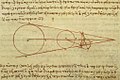 Aristarchus of Samos
 -
 Flammarion Engraving
 -
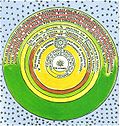 Thomas Digges' Map
 -
 The Earth from Apollo 17
 -
 Solar System in True Color
 -
 Radcliffe Wave
 -
 Milky Way Arms
 -
 Artist's Impression of the Milky Way
 -
 Local Group and Nearest Galaxies


.png)


.jpg)

