Progestogen: Difference between revisions
CSV import |
CSV import Tags: mobile edit mobile web edit |
||
| Line 28: | Line 28: | ||
{{stub}} | {{stub}} | ||
{{dictionary-stub1}} | {{dictionary-stub1}} | ||
<gallery> | |||
File:Progestogen Progesterone.svg|Progestogen Progesterone | |||
File:Steroidogenesis.svg|Steroidogenesis | |||
</gallery> | |||
Revision as of 01:46, 17 February 2025
Progestogen is a type of hormone that plays a significant role in the menstrual cycle and pregnancy. It is one of the major classes of sex hormones and includes progesterone, a naturally occurring hormone, and several synthetic compounds.
Function
Progestogens are primarily involved in the regulation of the menstrual cycle. They prepare the endometrium for implantation of a fertilized ovum, and help to maintain pregnancy. They also have important effects on the mammary glands, preparing them for breastfeeding.
Types
There are two main types of progestogens: natural and synthetic. Natural progestogens include progesterone, which is produced by the ovaries during the second half of the menstrual cycle. Synthetic progestogens, also known as progestins, are used in a variety of hormonal contraceptives, including birth control pills, intrauterine devices, and contraceptive implants.
Medical uses
Progestogens are used in a variety of medical applications. They are used in hormonal contraceptives to prevent pregnancy. They are also used in hormone replacement therapy to treat symptoms of menopause, and in the treatment of endometriosis, a condition in which endometrial tissue grows outside the uterus.
Side effects
Like all hormones, progestogens can have side effects. These can include mood changes, weight gain, breast tenderness, and headaches. In rare cases, they can cause more serious side effects such as blood clots and stroke.
See also
 | |
|---|---|
 |
 |
| This medical article is a stub. You can help Wikipedia by adding missing information. |
-
Progestogen Progesterone
-
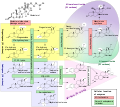 Steroidogenesis


