Poisoned candy myths: Difference between revisions
CSV import |
CSV import |
||
| Line 35: | Line 35: | ||
* [[University of Delaware study on poisoned candy myths]] | * [[University of Delaware study on poisoned candy myths]] | ||
{{dictionary-stub1}} | {{dictionary-stub1}} | ||
<gallery> | |||
File:Candyappels.JPG|Candy apples | |||
File:Candy_corn_strewn_on_a_black_background.jpg|Candy corn strewn on a black background | |||
File:Halloween_Trunk-or-Treat.jpg|Halloween Trunk-or-Treat | |||
</gallery> | |||
Latest revision as of 03:53, 18 February 2025
Introduction[edit]
Poisoned candy myths are urban legends about malevolent individuals who attempt to harm or kill others, particularly children, by adding poisonous substances or sharp objects to candy and other confectionery items. These myths are especially prevalent during the Halloween season.
History[edit]
The origins of poisoned candy myths can be traced back to the late 19th and early 20th centuries. During this time, there were widespread fears about the safety of commercially produced food and drink. These fears were often fueled by sensationalist media reports and a lack of regulation in the food industry.
Prevalence[edit]
Despite their persistence, there are very few documented cases of poisoned candy incidents. Most reported incidents turn out to be hoaxes, misunderstandings, or instances of individuals attempting to harm themselves or others in their household. Nevertheless, the myths continue to circulate, often fueled by media coverage and word of mouth.
Impact on Society[edit]
The poisoned candy myths have had a significant impact on how society views and celebrates Halloween. Many parents inspect their children's candy before allowing them to eat it, and some communities organize "safe" Halloween events where children can trick-or-treat in a controlled environment.
Debunking the Myths[edit]
Numerous studies and investigations have debunked the poisoned candy myths. For example, a comprehensive study by the University of Delaware found no evidence to support the myths. Similarly, the American Association of Poison Control Centers reports that the risk of a child being poisoned by Halloween candy is extremely low.
Conclusion[edit]
While the poisoned candy myths persist, it's important to remember that they are just that - myths. The actual risk of a child being harmed by poisoned or tampered Halloween candy is extremely low. However, it's always a good idea for parents to inspect their children's candy and to teach them not to accept food or drink from strangers.
See Also[edit]
References[edit]

-
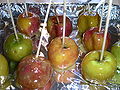 Candy apples
 -
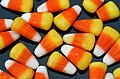 Candy corn strewn on a black background
 -
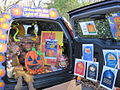 Halloween Trunk-or-Treat


