Diesel engine: Difference between revisions
CSV import |
CSV import |
||
| Line 31: | Line 31: | ||
{{stub}} | {{stub}} | ||
== Diesel engine gallery == | |||
<gallery> | |||
File:Dieselmotor Langen & Wolf, 1898.jpg|Dieselmotor Langen & Wolf, 1898 | |||
File:Lumbar patent dieselengine.jpg|Lumbar patent diesel engine | |||
File:Experimental Diesel Engine.jpg|Experimental Diesel Engine | |||
File:Historical Diesel engine in Deutsches Museum.jpg|Historical Diesel engine in Deutsches Museum | |||
File:Dieselmotor vs.jpg|Dieselmotor vs | |||
File:Fairbanks Morse model 32.jpg|Fairbanks Morse model 32 | |||
File:ZT 303 Motor.jpg|ZT 303 Motor | |||
File:OM 352.jpg|OM 352 | |||
File:Neckarsulm-AudiForum-Audi-R10-TDI.jpg|Neckarsulm AudiForum Audi R10 TDI | |||
</gallery> | |||
Latest revision as of 17:50, 3 March 2025
Diesel engine is a type of internal combustion engine invented by Rudolf Diesel. Diesel engines are known for their high efficiency and power. They are commonly used in heavy-duty vehicles such as trucks, buses, and construction equipment.
History[edit]
The diesel engine was invented by Rudolf Diesel in 1892. He was a German engineer who was interested in creating an engine that was more efficient than the steam engine. Diesel's engine used the heat of compression to ignite the fuel, which made it more efficient than other types of engines at the time.
Design and operation[edit]
Diesel engines operate by drawing air into the cylinder, compressing it, and then injecting fuel into the compressed air. The heat of the compressed air ignites the fuel, causing it to burn and push the piston down. This is known as the diesel cycle.
Diesel engines are designed to operate at high compression ratios, which makes them more efficient than gasoline engines. However, this also makes them heavier and more expensive to build.
Applications[edit]
Diesel engines are used in a wide variety of applications, including:
- Transportation: Diesel engines are commonly used in trucks, buses, and other heavy-duty vehicles. They are also used in some passenger cars, although this is less common.
- Construction: Many types of construction equipment, such as bulldozers and excavators, are powered by diesel engines.
- Power generation: Diesel engines are often used in generators to produce electricity, especially in remote or off-grid locations.
- Marine: Many ships and boats use diesel engines for propulsion.
Environmental impact[edit]
Diesel engines emit a variety of pollutants, including particulate matter and nitrogen oxides. These pollutants can have negative impacts on air quality and human health. However, modern diesel engines are equipped with emission control systems that can significantly reduce these emissions.
See also[edit]
 | |
|---|---|
 |
 |
Diesel engine gallery[edit]
-
Dieselmotor Langen & Wolf, 1898
-
 Lumbar patent diesel engine
 -
 Experimental Diesel Engine
 -
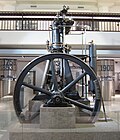 Historical Diesel engine in Deutsches Museum
 -
 Dieselmotor vs
 -
Fairbanks Morse model 32
-
ZT 303 Motor
-
OM 352
-
Neckarsulm AudiForum Audi R10 TDI


