Paul Bocuse: Difference between revisions
CSV import |
CSV import |
||
| Line 37: | Line 37: | ||
* [http://www.institutpaulbocuse.com Paul Bocuse Institute official website] | * [http://www.institutpaulbocuse.com Paul Bocuse Institute official website] | ||
{{dictionary-stub1}} | {{dictionary-stub1}} | ||
== Paul Bocuse == | |||
<gallery> | |||
File:Paul_Bocuse2.jpg|Paul Bocuse | |||
File:Meilleur_Ouvrier_de_France_-_Paul_Bocuse.jpg|Paul Bocuse as Meilleur Ouvrier de France | |||
File:Paul_Bocuse_2007.jpg|Paul Bocuse in 2007 | |||
File:Paul_Bocuse_le_nord.jpg|Paul Bocuse le nord | |||
File:Restaurant_Paul_Bocuse.JPG|Restaurant Paul Bocuse | |||
</gallery> | |||
Latest revision as of 04:34, 18 February 2025
Paul Bocuse[edit]
Paul Bocuse was a renowned French chef who is recognized as one of the pioneers of nouvelle cuisine. He was born on February 11, 1926, in Collonges-au-Mont-d'Or, France, and passed away on January 20, 2018. Bocuse was known for his innovative approach to cuisine, which emphasized fresh ingredients and lighter sauces. His culinary style was a significant departure from the traditional, heavy French cuisine of the time.
Early Life and Career[edit]
Bocuse was born into a family with a long tradition of cooking, dating back to the 17th century. His father was a chef, and Bocuse began his culinary training at the age of 16. He apprenticed under several famous chefs, including Fernand Point, who greatly influenced his cooking style.
In 1958, Bocuse took over his family's restaurant, l'Auberge du Pont de Collonges, also known as Bocuse's Restaurant. Under his leadership, the restaurant earned three Michelin Stars, a prestigious honor it has maintained for over 50 years.
Nouvelle Cuisine[edit]
Bocuse is often credited as one of the main figures behind the development of nouvelle cuisine. This culinary movement, which emerged in the 1960s, emphasized fresh, high-quality ingredients, and a lighter touch with sauces and seasonings. Bocuse's dishes were known for their simplicity and elegance, a stark contrast to the complex, heavily sauced dishes of traditional French cuisine.
Legacy[edit]
Bocuse's influence on the culinary world extends beyond his restaurant and his role in the nouvelle cuisine movement. He also founded the Bocuse d'Or, a prestigious international cooking competition. In addition, he established the Paul Bocuse Institute, a culinary school that has trained many successful chefs.
Bocuse was awarded numerous honors throughout his career, including the title of "Chef of the Century" by the Gault Millau guide. His contributions to French cuisine and the culinary world at large have left a lasting legacy.
See Also[edit]
References[edit]
<references />
External Links[edit]

Paul Bocuse[edit]
-
 Paul Bocuse
 -
 Paul Bocuse as Meilleur Ouvrier de France
 -
 Paul Bocuse in 2007
 -
 Paul Bocuse le nord
 -
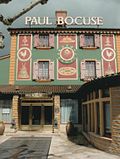 Restaurant Paul Bocuse


