Globalization and disease: Difference between revisions
CSV import |
CSV import Tags: mobile edit mobile web edit |
||
| Line 21: | Line 21: | ||
{{stub}} | {{stub}} | ||
<gallery> | |||
File:Age_of_Discovery_explorations_in_English.png|Globalization_and_disease | |||
File:Micco_Spadaro_-_Largo_Mercatello_durante_la_peste_a_Napoli_(1656).jpg|Globalization_and_disease | |||
File:World_distribution_of_plague_1998.PNG|Globalization_and_disease | |||
File:400Behandlung_der_Syphilis.jpg|Globalization_and_disease | |||
File:Leprosy_new_case_detection_2016_rates,_2016_(cropped).png|Globalization_and_disease | |||
File:World-map-of-past-and-current-malaria-prevalence-world-development-report-2009.png|Globalization_and_disease | |||
File:Tuberculosis-prevalence-WHO-2009.svg|Globalization_and_disease | |||
File:HIV_Epidem_2.png|Globalization_and_disease | |||
File:Ebolafälle_bis_einschließlich_2020_english.png|Globalization_and_disease | |||
File:广河高速-必须佩戴口罩.jpg|Globalization_and_disease | |||
</gallery> | |||
Revision as of 12:17, 18 February 2025
Globalization and Disease is a topic that explores the impact of globalization on the spread and control of disease. It is a complex issue that involves various aspects of society, including economics, politics, and culture.
Overview
Globalization refers to the increasing interconnectedness of countries and peoples around the world. This process has been facilitated by advances in technology, transportation, and communication. While globalization has many benefits, it also poses significant challenges, particularly in the field of public health. One of the major concerns is the spread of infectious diseases across borders.
Globalization and Infectious Diseases
The spread of infectious diseases is not a new phenomenon. However, globalization has accelerated this process. Diseases that were once confined to specific regions can now spread rapidly across the globe. This is due to increased travel and trade, as well as changes in land use and climate. Examples of diseases that have spread due to globalization include HIV/AIDS, SARS, and Ebola.
Globalization and Non-Infectious Diseases
Globalization also impacts the spread of non-infectious diseases. Changes in diet and lifestyle associated with globalization have led to an increase in diseases such as obesity, diabetes, and heart disease. These diseases are now a major public health concern in many countries.
Globalization and Public Health
Globalization presents both challenges and opportunities for public health. On one hand, it facilitates the spread of diseases. On the other hand, it also provides opportunities for international cooperation in disease control. For example, the World Health Organization (WHO) and other international organizations play a crucial role in coordinating global efforts to combat diseases.
Conclusion
In conclusion, globalization has a significant impact on the spread and control of diseases. It is therefore important for public health officials and policymakers to consider the implications of globalization when developing strategies to prevent and control diseases.
 | |
|---|---|
 |
 |
-
 Globalization_and_disease
 -
 Globalization_and_disease
 -
 Globalization_and_disease
 -
 Globalization_and_disease
 -
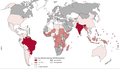 Globalization_and_disease
 -
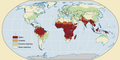 Globalization_and_disease
 -
 Globalization_and_disease
 -
 Globalization_and_disease
 -
 Globalization_and_disease
 -
 Globalization_and_disease

.jpg)


.png)


