Korean barbecue: Difference between revisions
CSV import Tags: mobile edit mobile web edit |
CSV import |
||
| Line 53: | Line 53: | ||
[[Category:Barbecue]] | [[Category:Barbecue]] | ||
[[Category:Grilled foods]] | [[Category:Grilled foods]] | ||
<gallery> | |||
File:Yayeon_(Night_Banquet).jpg|Korean_barbecue | |||
File:Sutbul.jpg|Korean_barbecue | |||
File:Korean_barbecue-Galbi-06.jpg|Korean_barbecue | |||
File:Korean_barbeque-pork_belly.jpg|Korean_barbecue | |||
File:Korean.food-Galbi-03.jpg|Korean_barbecue | |||
File:Korean_BBQ-freshcut-01.jpg|Korean_barbecue | |||
File:Marinated_galbi.jpg|Korean_barbecue | |||
File:Korean_barbecue-03.jpg|Korean_barbecue | |||
File:Korean_BBQ-Galbisal-01.jpg|Korean_barbecue | |||
File:Korean_BBQ-Galbisal-02.jpg|Korean_barbecue | |||
File:Pajori_(cropped).jpg|Korean_barbecue | |||
</gallery> | |||
Revision as of 12:03, 18 February 2025
Korean Barbecue
| [[File:|frameless|alt=]] | |
| Alternative names | |
| Type | |
| Course | |
| Place of origin | South Korea |
| Region or state | East Asia |
| Associated national cuisine | |
| Created by | |
| Invented | |
| Cooking time | minutes to minutes |
| Serving temperature | |
| Main ingredients | Meat (beef, pork, chicken, or seafood) |
| Ingredients generally used | |
| Variations | |
| Food energy | kcal |
| Nutritional value | Protein: g, Fat: g, Carbohydrate: g |
| Glycemic index | |
| Similar dishes | |
| Other information | |
| Website | [ Official website] |
Korean barbecue refers to the popular method of grilling meat, typically beef, pork, chicken, or seafood, in South Korea. It is a significant part of Korean cuisine and has gained international popularity in recent years. Korean barbecue is known for its unique flavors, interactive dining experience, and emphasis on high-quality ingredients.
History
The origins of Korean barbecue can be traced back to ancient times when people in Korea began cooking meat over open fires. However, the modern concept of Korean barbecue as we know it today emerged during the 20th century. It became popular after the Korean War when meat became more accessible to the general population.
Preparation and Cooking
Korean barbecue is typically prepared by marinating the meat in a mixture of soy sauce, garlic, sugar, sesame oil, and other seasonings. The marinated meat is then grilled at the table on a charcoal or gas grill, or sometimes on a stove-top griddle. The grilling process allows the meat to develop a smoky and caramelized flavor.
Types of Meat
There are various types of meat commonly used in Korean barbecue. Beef is the most popular choice and can include cuts such as bulgogi (marinated thinly sliced beef), galbi (marinated beef short ribs), and samgyeopsal (pork belly). Pork is also widely enjoyed, with options like dwaeji galbi (marinated pork ribs) and jokbal (pig's trotters). Chicken and seafood, such as shrimp and squid, are also popular choices for Korean barbecue.
Side Dishes
Korean barbecue is often accompanied by a variety of side dishes, known as banchan. These side dishes can include kimchi (fermented cabbage), pickled vegetables, bean sprouts, spinach, and various types of dipping sauces. The combination of the grilled meat and the flavorful side dishes creates a balanced and satisfying meal.
Dining Experience
One of the unique aspects of Korean barbecue is the interactive dining experience it offers. Typically, the meat is grilled at the center of the table, allowing diners to participate in the cooking process. This communal style of dining encourages socializing and sharing food with others. It is common for friends and family to gather around a Korean barbecue grill, enjoying the delicious food and engaging in lively conversations.
Popularity and Influence
Korean barbecue has gained significant popularity worldwide, with Korean barbecue restaurants opening in many major cities around the globe. Its appeal lies in the combination of flavors, the interactive nature of the dining experience, and the opportunity to try a variety of meats and side dishes. Korean barbecue has also influenced other cuisines, with fusion dishes incorporating Korean barbecue elements becoming increasingly popular.
See Also
References
<references group="" responsive="1"></references>
-
Korean_barbecue
-
 Korean_barbecue
 -
 Korean_barbecue
 -
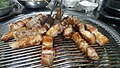 Korean_barbecue
 -
 Korean_barbecue
 -
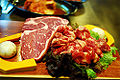 Korean_barbecue
 -
 Korean_barbecue
 -
 Korean_barbecue
 -
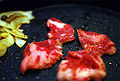 Korean_barbecue
 -
 Korean_barbecue
 -
 Korean_barbecue


.jpg)

.jpg)