Token Ring: Difference between revisions
CSV import |
CSV import |
||
| Line 48: | Line 48: | ||
[[Category:Local Area Networks]] | [[Category:Local Area Networks]] | ||
[[Category:Obsolete Technologies]] | [[Category:Obsolete Technologies]] | ||
== Token Ring gallery == | |||
<gallery> | |||
File:token ring.svg|Token Ring Diagram | |||
File:TokenRingLogicalNetwork.svg|Token Ring Logical Network | |||
File:Physical Token Ring Wiring.jpg|Physical Token Ring Wiring | |||
File:IBM hermaphroditic connector.JPG|IBM Hermaphroditic Connector | |||
File:IBM 8228 Multistation Access Unit.JPG|IBM 8228 Multistation Access Unit | |||
File:Token ring concentrator diagram.png|Token Ring Concentrator Diagram | |||
File:IBM 2210 Router Interfaces.JPG|IBM 2210 Router Interfaces | |||
</gallery> | |||
Latest revision as of 05:42, 3 March 2025
Token Ring
Token Ring is a local area network (LAN) technology that was widely used in the 1980s and 1990s. It was developed by IBM and became an industry standard for connecting computers and other devices in a network. Token Ring operates on the physical and data link layers of the OSI model, providing a reliable and efficient method of data transmission.
History[edit]
Token Ring was first introduced by IBM in the early 1980s as an alternative to Ethernet, another popular LAN technology at the time. It was initially designed to support IBM's mainframe computers, but its popularity quickly spread to other platforms. The first version of Token Ring, known as IEEE 802.5, operated at a data rate of 4 Mbps.
In the late 1980s, IBM introduced Token Ring with a higher data rate of 16 Mbps, known as Token Ring 16. This version offered improved performance and became the de facto standard for Token Ring networks. However, with the emergence of Ethernet as a faster and more cost-effective alternative, Token Ring started to decline in popularity.
Operation[edit]
Token Ring operates on the principle of passing a token, or a special control frame, around the network. Only the device holding the token is allowed to transmit data, ensuring that there are no collisions and providing fair access to the network resources. This token passing mechanism allows for deterministic and predictable network performance.
Devices in a Token Ring network are connected in a logical ring topology, where each device is connected to its neighboring devices. The physical cabling can be either a star or a physical ring, depending on the implementation. When a device wants to transmit data, it waits for the token to arrive, seizes it, and then sends the data. Once the data transmission is complete, the token is released and passed on to the next device.
Advantages and Disadvantages[edit]
Token Ring offered several advantages over Ethernet, including:
1. Deterministic Performance: Token passing ensures that each device has a fair chance to transmit data, resulting in predictable network performance.
2. Reliability: Token Ring networks are less prone to collisions and data loss compared to Ethernet networks.
3. Security: Token Ring provides built-in security features, such as the ability to disable or enable specific devices on the network.
However, Token Ring also had some disadvantages, which contributed to its decline:
1. Cost: Token Ring hardware and cabling were more expensive than Ethernet, making it less attractive for cost-conscious organizations.
2. Limited Scalability: Token Ring networks had a maximum capacity of 16 Mbps, while Ethernet offered higher data rates and better scalability.
3. Complexity: Token Ring networks required more configuration and management compared to Ethernet, making them less user-friendly.
Legacy and Current Usage[edit]
With the rise of Ethernet as the dominant LAN technology, Token Ring has become largely obsolete. However, there are still some legacy Token Ring networks in use, particularly in older organizations that have not upgraded their infrastructure.
In modern networks, Token Ring has been replaced by Ethernet and other technologies that offer higher data rates, better scalability, and lower costs. Ethernet has evolved to support speeds ranging from 10 Mbps to 100 Gbps and has become the standard for LAN connectivity.
See Also[edit]
- Ethernet - Another popular LAN technology
- Local Area Network - A network that connects devices within a limited area
- OSI Model - A conceptual framework for understanding network protocols
References[edit]
<references />
Token Ring gallery[edit]
-
 Token Ring Diagram
 -
 Token Ring Logical Network
 -
 Physical Token Ring Wiring
 -
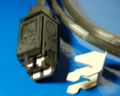 IBM Hermaphroditic Connector
 -
 IBM 8228 Multistation Access Unit
 -
 Token Ring Concentrator Diagram
 -
 IBM 2210 Router Interfaces


