Rurales: Difference between revisions
CSV import |
CSV import |
||
| Line 40: | Line 40: | ||
[[Category:Mexican history]] | [[Category:Mexican history]] | ||
[[Category:Porfiriato]] | [[Category:Porfiriato]] | ||
<gallery> | |||
File:Rurales Mexico Su Evolucion Social 1900 Justo Sierra 2.jpg|Rurales Mexico Su Evolucion Social 1900 Justo Sierra 2 | |||
File:Coat of arms of Mexico.svg|Coat of arms of Mexico | |||
File:Benito Pablo Juárez García.png|Benito Pablo Juárez García | |||
File:Porfirio Diaz in uniform.jpg|Porfirio Diaz in uniform | |||
File:Rurales.jpg|Rurales | |||
File:Manuel Ramos Guardia Rural.jpg|Manuel Ramos Guardia Rural | |||
File:Mexico - Rurales. (21842427026).jpg|Mexico - Rurales | |||
File:Mexican Rurales., 1922 - 1922 - NARA - 533139.tif|Mexican Rurales, 1922 | |||
</gallery> | |||
Latest revision as of 05:56, 3 March 2025
Rurales[edit]
The Rurales were a specialized police force in Mexico during the late 19th and early 20th centuries. They played a significant role in maintaining law and order in rural areas, particularly during the Porfiriato, the period of Porfirio Díaz's presidency from 1876 to 1911.
History[edit]
The Rurales were established in 1861 by President Benito Juárez as a response to the increasing lawlessness and banditry in rural regions of Mexico. Initially, their primary objective was to protect rural communities from bandits and maintain peace and stability in the countryside.
Under the rule of Porfirio Díaz, the Rurales underwent significant reforms and became an integral part of his regime's efforts to modernize Mexico. Díaz expanded the force and equipped them with modern weapons and horses, transforming them into a highly efficient and feared police force.
Organization and Duties[edit]
The Rurales were organized into regional divisions, with each division responsible for a specific geographic area. They were known for their distinctive uniforms, which consisted of a sombrero, a charro suit, and a cartridge belt. This attire not only served as a symbol of authority but also helped to distinguish them from other law enforcement agencies.
Their primary duties included maintaining law and order, protecting rural communities from bandits and outlaws, and suppressing any form of rebellion or opposition to the government. They were also responsible for enforcing tax collection, ensuring compliance with government policies, and protecting the interests of large landowners.
Controversies and Criticisms[edit]
While the Rurales were initially created to protect rural communities, they soon became notorious for their abuses of power. They were accused of engaging in corruption, extortion, and human rights violations. Many rural inhabitants lived in fear of the Rurales, who often acted with impunity and were known for their brutal tactics.
The force's close association with the ruling regime also made them targets of opposition groups and revolutionaries. During the Mexican Revolution (1910-1920), the Rurales were seen as enforcers of Díaz's oppressive regime and were a frequent target of attacks by revolutionary forces.
Legacy[edit]
Despite their controversial reputation, the Rurales played a significant role in maintaining control and order in rural Mexico during the Porfiriato. They were instrumental in suppressing banditry and maintaining the authority of the central government in remote areas.
The Rurales' legacy is complex and multifaceted. While they were seen as oppressive and corrupt by many, they also represented a symbol of authority and security for some rural communities. Their existence and actions during the Porfiriato era continue to be studied and debated by historians and scholars interested in Mexican history.
See Also[edit]
References[edit]
<references />
-
 Rurales Mexico Su Evolucion Social 1900 Justo Sierra 2
 -
 Coat of arms of Mexico
 -
 Benito Pablo Juárez García
 -
 Porfirio Diaz in uniform
 -
Rurales
-
 Manuel Ramos Guardia Rural
 -
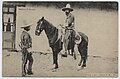 Mexico - Rurales
 -
 Mexican Rurales, 1922


.jpg)

