Human skull symbolism: Difference between revisions
CSV import |
No edit summary |
||
| (2 intermediate revisions by the same user not shown) | |||
| Line 1: | Line 1: | ||
''' | {{Short description|Symbolic meanings and cultural significance of the human skull}} | ||
The '''human skull''' has been a powerful symbol in various cultures throughout history. It is often associated with death, mortality, and the passage of time, but it also represents protection, strength, and wisdom in different contexts. This article explores the symbolism of the human skull across different cultures and its significance in art, religion, and popular culture. | |||
== | ==Symbolism in Different Cultures== | ||
In | ===Western Culture=== | ||
In Western culture, the human skull is predominantly seen as a symbol of death and mortality. It is often used in [[memento mori]] art, which serves as a reminder of the inevitability of death. The skull is also a common motif in [[pirate]] imagery, symbolizing danger and the threat of death. | |||
== | ===Eastern Culture=== | ||
In some Eastern traditions, the skull is seen as a symbol of transformation and change. In [[Tibetan Buddhism]], skulls are used in ritual objects such as the [[kapala]], a cup made from a human skull, which is used in tantric practices to symbolize the transformation of base desires into wisdom. | |||
In | ===Mexican Culture=== | ||
In Mexican culture, the skull is a central symbol in the celebration of [[Día de los Muertos]] (Day of the Dead). During this festival, skulls, often made of sugar and decorated with colorful patterns, are used to honor deceased loved ones and celebrate the cycle of life and death. | |||
== | ==Skull Symbolism in Art== | ||
The human skull has been a popular subject in art for centuries. In the [[Renaissance]], artists like [[Hans Holbein the Younger]] used skulls in their paintings to convey the theme of mortality. The skull is also a prominent feature in [[vanitas]] paintings, which are still life artworks that include symbols of death and the transience of life. | |||
== | ==Religious Significance== | ||
In [[Christianity]], the skull is often associated with [[Golgotha]], the site where Jesus was crucified, which is also known as "the place of the skull." The skull is sometimes depicted at the foot of the cross in Christian art, symbolizing the victory of Christ over death. | |||
In | ==Skull Symbolism in Popular Culture== | ||
In modern popular culture, the skull is often used as a symbol of rebellion and nonconformity. It is a common motif in [[punk]] and [[goth]] subcultures, where it represents a rejection of mainstream values and an embrace of individuality. | |||
== | == Gallery == | ||
<gallery> | <gallery> | ||
File:Lucas_van_Leyden_019.jpg|Human_skull_symbolism | File:Lucas_van_Leyden_019.jpg|Human_skull_symbolism | ||
| Line 44: | Line 37: | ||
File:Sweaterdog.jpg|Human_skull_symbolism | File:Sweaterdog.jpg|Human_skull_symbolism | ||
</gallery> | </gallery> | ||
==Related Pages== | |||
* [[Memento mori]] | |||
* [[Vanitas]] | |||
* [[Día de los Muertos]] | |||
* [[Golgotha]] | |||
* [[Kapala]] | |||
{{culture-stub}} | |||
[[Category:Symbolism]] | |||
[[Category:Death customs]] | |||
[[Category:Art motifs]] | |||
Latest revision as of 21:51, 21 February 2025
Symbolic meanings and cultural significance of the human skull
The human skull has been a powerful symbol in various cultures throughout history. It is often associated with death, mortality, and the passage of time, but it also represents protection, strength, and wisdom in different contexts. This article explores the symbolism of the human skull across different cultures and its significance in art, religion, and popular culture.
Symbolism in Different Cultures[edit]
Western Culture[edit]
In Western culture, the human skull is predominantly seen as a symbol of death and mortality. It is often used in memento mori art, which serves as a reminder of the inevitability of death. The skull is also a common motif in pirate imagery, symbolizing danger and the threat of death.
Eastern Culture[edit]
In some Eastern traditions, the skull is seen as a symbol of transformation and change. In Tibetan Buddhism, skulls are used in ritual objects such as the kapala, a cup made from a human skull, which is used in tantric practices to symbolize the transformation of base desires into wisdom.
Mexican Culture[edit]
In Mexican culture, the skull is a central symbol in the celebration of Día de los Muertos (Day of the Dead). During this festival, skulls, often made of sugar and decorated with colorful patterns, are used to honor deceased loved ones and celebrate the cycle of life and death.
Skull Symbolism in Art[edit]
The human skull has been a popular subject in art for centuries. In the Renaissance, artists like Hans Holbein the Younger used skulls in their paintings to convey the theme of mortality. The skull is also a prominent feature in vanitas paintings, which are still life artworks that include symbols of death and the transience of life.
Religious Significance[edit]
In Christianity, the skull is often associated with Golgotha, the site where Jesus was crucified, which is also known as "the place of the skull." The skull is sometimes depicted at the foot of the cross in Christian art, symbolizing the victory of Christ over death.
Skull Symbolism in Popular Culture[edit]
In modern popular culture, the skull is often used as a symbol of rebellion and nonconformity. It is a common motif in punk and goth subcultures, where it represents a rejection of mainstream values and an embrace of individuality.
Gallery[edit]
-
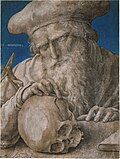 Human_skull_symbolism
 -
 Human_skull_symbolism
 -
 Human_skull_symbolism
 -
 Human_skull_symbolism
 -
 Human_skull_symbolism
 -
 Human_skull_symbolism
 -
 Human_skull_symbolism
 -
 Human_skull_symbolism
 -
 Human_skull_symbolism
 -
 Human_skull_symbolism
 -
 Human_skull_symbolism
 -
 Human_skull_symbolism


