Alcea rosea: Difference between revisions
CSV import |
CSV import |
||
| Line 11: | Line 11: | ||
File:ALCEA_ROSEA_spring_celebrities_white.jpg|Alcea rosea | File:ALCEA_ROSEA_spring_celebrities_white.jpg|Alcea rosea | ||
</gallery> | </gallery> | ||
==Alcea rosea== | |||
'''Alcea rosea''', commonly known as the [[hollyhock]], is a species of flowering plant in the [[mallow family]], [[Malvaceae]]. It is native to [[Asia]] and [[Europe]] but has been widely cultivated and naturalized in many regions around the world. | |||
==Description== | |||
''Alcea rosea'' is a biennial or short-lived perennial plant that can grow to a height of 1.5 to 3 meters. The plant has a robust, erect stem and large, rounded leaves with a rough texture. The leaves are typically lobed and have a hairy surface. | |||
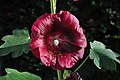
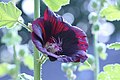
The flowers of ''Alcea rosea'' are large and showy, with a diameter of 5 to 10 centimeters. They come in a variety of colors, including pink, red, white, yellow, and purple. The flowers are arranged in a terminal raceme and bloom from the bottom upwards. Each flower has five petals and numerous stamens. | |||
==Cultivation== | |||
''Alcea rosea'' is a popular ornamental plant in gardens due to its tall stature and colorful blooms. It prefers full sun and well-drained soil. The plant is relatively easy to grow and can be propagated by seed. It is often used in cottage gardens and as a background plant in flower beds. | |||
Hollyhocks are susceptible to certain diseases, such as [[rust (fungus)|rust]], which can cause orange spots on the leaves. Regular maintenance and proper spacing can help reduce the incidence of disease. | |||
==Uses== | |||
In addition to its ornamental value, ''Alcea rosea'' has been used in traditional medicine. The flowers and leaves have been used to treat respiratory and digestive issues. The plant contains mucilage, which has soothing properties. | |||
The flowers of ''Alcea rosea'' can also be used to produce a natural dye. The dye can range in color from pink to purple, depending on the pH of the solution. | |||
==Related pages== | |||
* [[Malvaceae]] | |||
* [[Biennial plant]] | |||
* [[Perennial plant]] | |||
* [[Rust (fungus)]] | |||
{{Taxonbar|from=Q157852}} | |||
[[Category:Malvaceae]] | |||
[[Category:Flora of Asia]] | |||
[[Category:Flora of Europe]] | |||
[[Category:Garden plants]] | |||
Latest revision as of 00:35, 19 February 2025
-
 Alcea rosea
 -
 Alcea rosea
 -
 Alcea rosea
 -
 Alcea rosea
 -
 Alcea rosea
 -
 Alcea rosea
 -
 Alcea rosea
 -
 Alcea rosea
 -
 Alcea rosea
 -
 Alcea rosea

.jpg)


.JPG)
_-_Ystad-2023.jpg)

Alcea rosea[edit]
Alcea rosea, commonly known as the hollyhock, is a species of flowering plant in the mallow family, Malvaceae. It is native to Asia and Europe but has been widely cultivated and naturalized in many regions around the world.
Description[edit]
Alcea rosea is a biennial or short-lived perennial plant that can grow to a height of 1.5 to 3 meters. The plant has a robust, erect stem and large, rounded leaves with a rough texture. The leaves are typically lobed and have a hairy surface.
The flowers of Alcea rosea are large and showy, with a diameter of 5 to 10 centimeters. They come in a variety of colors, including pink, red, white, yellow, and purple. The flowers are arranged in a terminal raceme and bloom from the bottom upwards. Each flower has five petals and numerous stamens.
Cultivation[edit]
Alcea rosea is a popular ornamental plant in gardens due to its tall stature and colorful blooms. It prefers full sun and well-drained soil. The plant is relatively easy to grow and can be propagated by seed. It is often used in cottage gardens and as a background plant in flower beds.
Hollyhocks are susceptible to certain diseases, such as rust, which can cause orange spots on the leaves. Regular maintenance and proper spacing can help reduce the incidence of disease.
Uses[edit]
In addition to its ornamental value, Alcea rosea has been used in traditional medicine. The flowers and leaves have been used to treat respiratory and digestive issues. The plant contains mucilage, which has soothing properties.
The flowers of Alcea rosea can also be used to produce a natural dye. The dye can range in color from pink to purple, depending on the pH of the solution.
