Advanced trauma life support: Difference between revisions
No edit summary |
CSV import |
||
| (One intermediate revision by the same user not shown) | |||
| Line 3: | Line 3: | ||
==History== | ==History== | ||
The ATLS program was developed following a plane crash in 1976 involving Dr. [[James K. Styner]], an orthopedic surgeon, and his family. The incident highlighted the need for a standardized approach to trauma care. Dr. Styner's experience led to the creation of the ATLS course, which was first introduced in 1980. | The ATLS program was developed following a plane crash in 1976 involving Dr. [[James K. Styner]], an orthopedic surgeon, and his family. The incident highlighted the need for a standardized approach to trauma care. Dr. Styner's experience led to the creation of the ATLS course, which was first introduced in 1980. | ||
==Principles== | ==Principles== | ||
| Line 32: | Line 30: | ||
[[Category:Medical education]] | [[Category:Medical education]] | ||
[[Category:Traumatology]] | [[Category:Traumatology]] | ||
== Advanced trauma life support == | |||
<gallery> | |||
File:Atencion_Prehospitalaria_por_estudiantes.jpg|Prehospital care by students | |||
File:James_K_Styner.jpg|James K. Styner | |||
File:The_Styner_Plane_after_the_crash.jpg|The Styner Plane after the crash | |||
</gallery> | |||
Latest revision as of 04:05, 18 February 2025
Advanced Trauma Life Support (ATLS) is a training program for medical providers in the management of acute trauma cases, developed by the American College of Surgeons. The program provides a systematic approach for the assessment and management of trauma patients.
History[edit]
The ATLS program was developed following a plane crash in 1976 involving Dr. James K. Styner, an orthopedic surgeon, and his family. The incident highlighted the need for a standardized approach to trauma care. Dr. Styner's experience led to the creation of the ATLS course, which was first introduced in 1980.
Principles[edit]
ATLS is based on the principle of treating the greatest threat to life first. It emphasizes a primary survey, which includes the ABCDE approach:
- Airway maintenance with cervical spine protection
- Breathing and ventilation
- Circulation with hemorrhage control
- Disability: neurological status
- Exposure and environmental control
Course Structure[edit]
The ATLS course is typically a two-day program that includes lectures, practical skills stations, and simulated patient scenarios. Participants are assessed through a written examination and practical skills assessment.
Global Impact[edit]
ATLS has been adopted in over 80 countries worldwide, with courses tailored to meet the specific needs of different regions. It has become a standard of care in trauma management and has significantly improved outcomes for trauma patients.
Criticism and Limitations[edit]
While ATLS is widely respected, it has faced criticism for its rigid structure and lack of flexibility in certain clinical situations. Some argue that it may not fully address the complexities of trauma care in resource-limited settings.
Related pages[edit]
Advanced trauma life support[edit]
-
 Prehospital care by students
 -
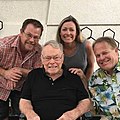 James K. Styner
 -
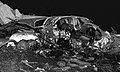 The Styner Plane after the crash


