Adaptation to extrauterine life: Difference between revisions
CSV import |
CSV import |
||
| Line 31: | Line 31: | ||
[[Category:Neonatology]] | [[Category:Neonatology]] | ||
[[Category:Human development]] | [[Category:Human development]] | ||
<gallery> | |||
File:Postnatal_genetics_en.svg | |||
</gallery> | |||
Latest revision as of 22:04, 16 February 2025
The physiological changes that occur in newborns as they transition from intrauterine to extrauterine life.
Adaptation to extrauterine life refers to the series of physiological changes that occur in a newborn as it transitions from the intrauterine environment to the outside world. This process involves significant adjustments in the respiratory system, circulatory system, thermoregulation, and metabolism.
Respiratory Adaptation[edit]
At birth, the newborn must initiate breathing to replace the placental gas exchange. The first breath is critical as it helps to inflate the lungs and establish functional residual capacity. The transition from fetal to neonatal circulation involves closure of the foramen ovale, ductus arteriosus, and ductus venosus.
Circulatory Changes[edit]
In utero, the fetus relies on the placenta for oxygen and nutrient exchange. After birth, the newborn's circulatory system undergoes significant changes. The increase in systemic vascular resistance and decrease in pulmonary vascular resistance facilitate the closure of fetal shunts and the establishment of adult circulation patterns.
Thermoregulation[edit]
Newborns must regulate their body temperature independently after birth. They lose heat rapidly due to their large surface area relative to body mass. Mechanisms such as non-shivering thermogenesis in brown adipose tissue are crucial for maintaining body temperature.
Metabolic Adaptation[edit]
The newborn must adapt to intermittent feeding and utilize stored energy reserves. Glycogenolysis, gluconeogenesis, and lipolysis are important metabolic pathways that provide energy during the transition period.
Immunological Adaptation[edit]
The newborn's immune system is immature at birth. Passive immunity is provided by maternal antibodies transferred through the placenta and breast milk. The infant's immune system gradually matures over the first few months of life.
Related pages[edit]
Gallery[edit]
-
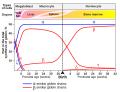 Diagram illustrating genetic changes postnatally.

