Acute cardiac unloading: Difference between revisions
CSV import |
CSV import |
||
| Line 65: | Line 65: | ||
[[Category:Cardiology]] | [[Category:Cardiology]] | ||
[[Category:Medical treatments]] | [[Category:Medical treatments]] | ||
<gallery> | |||
File:Acute_Unloading_Interupt_Spiral.png|Acute cardiac unloading | |||
File:End_Systolic_Pressure_Volume_Relationship.jpg|End systolic pressure-volume relationship | |||
File:Pressure_Volume_Area.jpg|Pressure volume area | |||
File:Complete_Unloading_Figure.png|Acute cardiac unloading | |||
</gallery> | |||
Latest revision as of 05:04, 18 February 2025
Acute Cardiac Unloading[edit]

Acute cardiac unloading refers to the rapid reduction of ventricular workload and myocardial oxygen consumption in patients with heart failure or acute myocardial infarction. This therapeutic approach aims to improve cardiac function and promote myocardial recovery by decreasing the mechanical stress on the heart.
Mechanism[edit]
Acute cardiac unloading is achieved through various mechanical and pharmacological interventions. The primary goal is to reduce the end-diastolic volume and end-systolic volume, thereby decreasing the ventricular pressure and wall stress. This can be accomplished using devices such as intra-aortic balloon pumps, ventricular assist devices, and extracorporeal membrane oxygenation systems.

Physiological Effects[edit]
The physiological effects of acute cardiac unloading include:
- Reduction in myocardial oxygen demand: By decreasing the workload of the heart, the oxygen demand of the myocardium is reduced, which is beneficial in ischemic conditions.
- Improvement in coronary perfusion: Unloading can enhance coronary blood flow by reducing left ventricular end-diastolic pressure, thereby improving myocardial perfusion.
- Prevention of adverse remodeling: By reducing mechanical stress, acute unloading can prevent or mitigate adverse ventricular remodeling, which is a common consequence of heart failure.
Clinical Applications[edit]
Acute cardiac unloading is utilized in various clinical scenarios, including:
- Acute myocardial infarction: To limit infarct size and preserve myocardial function.
- Cardiogenic shock: To stabilize hemodynamics and support end-organ perfusion.
- Heart failure exacerbations: To relieve symptoms and improve cardiac output.
Devices and Techniques[edit]
Several devices and techniques are employed for acute cardiac unloading:
- Intra-aortic balloon pump (IABP): A device that inflates and deflates in the aorta to reduce afterload and improve coronary perfusion.
- Ventricular assist devices (VADs): Mechanical pumps that support the function of the left or right ventricle.
- Extracorporeal membrane oxygenation (ECMO): Provides both cardiac and respiratory support by oxygenating blood outside the body.
Pressure-Volume Relationship[edit]
The pressure-volume relationship is a key concept in understanding cardiac function and the effects of unloading. The pressure-volume loop is used to visualize changes in cardiac function during unloading.

Complete Unloading[edit]
Complete unloading refers to the total cessation of ventricular work, often achieved with advanced mechanical support devices. This approach is used in severe cases where maximal reduction of myocardial stress is required.

Related Pages[edit]
Gallery[edit]
-
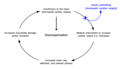 Acute unloading interrupt spiral.
 -
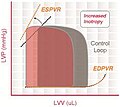 End-systolic pressure-volume relationship.
 -
 Pressure-volume area.
 -
 Complete unloading figure.
-
Acute cardiac unloading
-
End systolic pressure-volume relationship
-
Pressure volume area
-
Acute cardiac unloading
