Aehobak: Difference between revisions
CSV import |
CSV import |
||
| Line 45: | Line 45: | ||
[[Category:Korean cuisine]] | [[Category:Korean cuisine]] | ||
[[Category:Squash]] | [[Category:Squash]] | ||
<gallery> | |||
File:Aehobak.jpg|Aehobak | |||
File:Hobakgoji(dried_aehobak).jpg|Dried Aehobak | |||
File:Aehobak-bokkeum.jpg|Aehobak Bokkeum | |||
File:Aehobak-gyeran-mari_2.jpg|Aehobak Gyeran Mari | |||
File:Aehobak-buchimgae.jpg|Aehobak Buchimgae | |||
File:Galchi-aehobak-jorim.jpg|Galchi Aehobak Jorim | |||
File:Hobak-jeon.jpg|Hobak Jeon | |||
File:Hobak-seon.jpg|Hobak Seon | |||
</gallery> | |||
Latest revision as of 11:17, 18 February 2025
Aehobak[edit]

Aehobak (___) is a type of squash commonly used in Korean cuisine. It is known for its tender texture and mild flavor, making it a versatile ingredient in various dishes. Aehobak is similar to zucchini and is often used interchangeably in recipes.
Description[edit]
Aehobak is a summer squash that is typically light green in color. It has a smooth skin and a cylindrical shape. The flesh is tender and slightly sweet, with a high water content. Aehobak is usually harvested when it is young and small, which ensures its delicate texture and flavor.
Culinary Uses[edit]
Aehobak is a staple in Korean cooking and is used in a variety of dishes. It can be eaten raw, cooked, or dried. Some popular preparations include:
- Aehobak-bokkeum (_____): A stir-fried dish where aehobak is sautéed with garlic, onions, and sometimes other vegetables.
- Aehobak-gyeran-mari (_______): A rolled omelette that includes thinly sliced aehobak, providing a fresh and light flavor.
- Aehobak-buchimgae (______): A type of Korean pancake made with a batter of flour, eggs, and sliced aehobak, often served as a side dish or snack.
- Galchi-aehobak-jorim (_______): A braised dish combining aehobak with beltfish in a savory sauce.
- Hobak-jeon (___): A pan-fried dish where slices of aehobak are coated in flour and egg before being fried.
- Hobak-seon (___): A dish where aehobak is stuffed with seasoned meat or vegetables and then steamed.
Preservation[edit]
Aehobak can be preserved by drying, which concentrates its flavor and allows it to be stored for longer periods. Dried aehobak, known as Hobakgoji, can be rehydrated and used in soups and stews.
.jpg)
Related Pages[edit]
Gallery[edit]
-
 Aehobak-bokkeum
 -
 Aehobak-gyeran-mari
 -
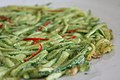 Aehobak-buchimgae
 -
 Galchi-aehobak-jorim
 -
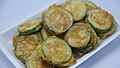 Hobak-jeon
 -
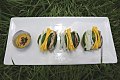 Hobak-seon


-
 Aehobak
 -
 Dried Aehobak
 -
Aehobak Bokkeum
-
Aehobak Gyeran Mari
-
Aehobak Buchimgae
-
Galchi Aehobak Jorim
-
Hobak Jeon
-
Hobak Seon
