2008 Chinese milk scandal: Difference between revisions
CSV import |
CSV import |
||
| Line 40: | Line 40: | ||
[[Category:2008 in China]] | [[Category:2008 in China]] | ||
[[Category:Health disasters in China]] | [[Category:Health disasters in China]] | ||
== 2008 Chinese milk scandal == | |||
<gallery> | |||
File:2008_Chinese_milk_scandal_-_empty_milk_shelves.jpg|Empty milk shelves during the 2008 Chinese milk scandal | |||
File:2008_Chinese_milk_scandal.JPG|2008 Chinese milk scandal | |||
File:1025demonstration_4.jpg|Protest related to the 2008 Chinese milk scandal | |||
</gallery> | |||
Latest revision as of 04:08, 18 February 2025
2008 Chinese Milk Scandal[edit]
The 2008 Chinese milk scandal was a significant food safety incident in China involving milk and infant formula adulterated with melamine. The scandal affected thousands of children and led to widespread public outrage and international concern over food safety standards in China.
Background[edit]
The scandal emerged in September 2008 when it was discovered that milk and infant formula products from several Chinese dairy companies were contaminated with melamine, a chemical used in plastics and fertilizers. Melamine was added to milk to artificially increase its apparent protein content during quality tests.
Discovery and Impact[edit]
The contamination was first detected after an increase in cases of kidney stones and other renal problems in infants. Investigations revealed that the melamine-tainted milk had been used in a wide range of dairy products, affecting not only infant formula but also other milk-based products.
Health Effects[edit]
The ingestion of melamine can lead to serious health issues, particularly in infants and young children. The primary health concern was the development of kidney stones and renal failure. It was reported that six infants died, and an estimated 300,000 children were affected by the contaminated milk.
Economic and Social Impact[edit]
The scandal had a profound impact on the Chinese dairy industry, leading to a significant loss of consumer confidence both domestically and internationally. Many countries imposed bans or restrictions on Chinese dairy products. The incident also led to increased scrutiny and regulatory changes in China's food safety system.
Government and Corporate Response[edit]
The Chinese government responded to the scandal by arresting several individuals involved in the production and distribution of the contaminated milk. The government also implemented stricter regulations and oversight of the dairy industry to prevent future incidents.
Legal Actions[edit]
Several executives from the companies involved were prosecuted, and some received severe penalties, including life imprisonment and the death penalty. The government also provided compensation to affected families.
Long-term Consequences[edit]
The 2008 Chinese milk scandal highlighted significant weaknesses in China's food safety regulations and enforcement. It prompted reforms aimed at improving food safety standards and restoring public trust in Chinese food products.
Related Pages[edit]
Gallery[edit]
-
 Empty milk shelves during the scandal
 -
 Public awareness campaign
 -
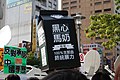 Demonstration related to the scandal


2008 Chinese milk scandal[edit]
-
Empty milk shelves during the 2008 Chinese milk scandal
-
2008 Chinese milk scandal
-
Protest related to the 2008 Chinese milk scandal
