Pseudonocardiaceae: Difference between revisions
CSV import |
No edit summary |
||
| (One intermediate revision by the same user not shown) | |||
| Line 28: | Line 28: | ||
[[Category:Actinobacteria]] | [[Category:Actinobacteria]] | ||
[[Category:Biotechnology]] | [[Category:Biotechnology]] | ||
<gallery> | |||
File:Pseudonocardia pini NRRL B-65534 (Type Strain).jpg|Pseudonocardia pini NRRL B-65534 (Type Strain) | |||
</gallery> | |||
Latest revision as of 00:57, 17 March 2025
Pseudonocardiaceae is a family of Actinobacteria, a phylum of bacteria. This family is characterized by its high G+C content in their DNA, and includes several genera that are significant in the field of biotechnology.
Taxonomy[edit]
The family Pseudonocardiaceae is part of the order Actinomycetales, which is the largest order within the phylum Actinobacteria. The family includes several genera, including Pseudonocardia, Actinokineospora, Saccharopolyspora, and Actinopolyspora.
Characteristics[edit]
Members of the Pseudonocardiaceae family are Gram-positive bacteria with high G+C content in their DNA. They are typically aerobic bacteria, and are found in a variety of environments, including soil, water, and even in extreme environments like salt pans and hot springs.
Biotechnology[edit]
Several genera within the Pseudonocardiaceae family are significant in biotechnology. For example, Pseudonocardia species are known to produce antibiotics, including nystatin and amphotericin B, which are used to treat fungal infections. Saccharopolyspora species are used in the production of erythromycin, an antibiotic used to treat a variety of bacterial infections.
See also[edit]
References[edit]
<references />

-
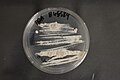 Pseudonocardia pini NRRL B-65534 (Type Strain)
.jpg)
