Transposon mutagenesis: Difference between revisions
CSV import |
CSV import Tags: mobile edit mobile web edit |
||
| Line 39: | Line 39: | ||
[[Category:Genetics]] | [[Category:Genetics]] | ||
[[Category:Molecular biology techniques]] | [[Category:Molecular biology techniques]] | ||
<gallery> | |||
File:Tn5_gene_diagram.png|Diagram of the Tn5 gene | |||
File:SBTS.png|SBTS image | |||
</gallery> | |||
Latest revision as of 01:59, 17 February 2025
Transposon Mutagenesis[edit]

Transposon mutagenesis is a technique used in genetics to create mutations in a genome. This method involves the insertion of a transposon, a segment of DNA that can move to different positions within the genome, thereby disrupting the function of genes and allowing researchers to study the effects of these mutations.
Mechanism[edit]
Transposons are mobile genetic elements that can "jump" from one location to another within a genome. This "jumping" is facilitated by the enzyme transposase, which recognizes specific sequences at the ends of the transposon and catalyzes its movement. When a transposon inserts itself into a gene, it can disrupt the gene's function, leading to a loss of function mutation. This property makes transposons useful tools for mutagenesis.
Applications[edit]
Transposon mutagenesis is widely used in functional genomics to identify and study gene function. By creating a library of mutants, each with a transposon inserted at a different location, researchers can screen for phenotypes of interest and identify the genes responsible for those traits. This technique is particularly useful in microbiology for studying bacteria and other microorganisms.
Advantages and Limitations[edit]
One of the main advantages of transposon mutagenesis is its ability to generate a large number of mutants quickly and efficiently. However, there are limitations, such as the potential for insertional bias, where transposons preferentially insert into certain regions of the genome. Additionally, the insertion of a transposon can sometimes have polar effects, influencing the expression of downstream genes.
Related Techniques[edit]

Transposon mutagenesis is related to other genetic techniques such as site-directed mutagenesis and CRISPR-Cas9 gene editing. While site-directed mutagenesis allows for precise changes at specific locations, transposon mutagenesis is more random, making it suitable for large-scale mutagenesis screens.
Related Pages[edit]
References[edit]
- Craig, N. L., Craigie, R., Gellert, M., & Lambowitz, A. M. (2002). Mobile DNA II. American Society of Microbiology Press.
- Reznikoff, W. S. (2008). Transposon Tn5. Annual Review of Genetics, 42, 269-286.

-
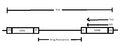 Diagram of the Tn5 gene
 -
 SBTS image
