Linnean Society of London: Difference between revisions
CSV import |
CSV import |
||
| (3 intermediate revisions by the same user not shown) | |||
| Line 1: | Line 1: | ||
The '''Linnean Society of London''' is a prestigious [[learned society]] dedicated to the study of [[natural history]], [[evolution]], and [[taxonomy]]. Founded in 1788, it is the world's oldest active biological society. The society is named after the Swedish naturalist [[Carl Linnaeus]], who is known for formalizing the modern system of naming organisms called [[binomial nomenclature]]. | |||
The '''Linnean Society of London''' is a [[learned society]] dedicated to the study of [[natural history | |||
== History == | == History == | ||
The Linnean Society was | The Linnean Society was established in 1788 by [[Sir James Edward Smith]], who purchased the entire collection of Linnaeus's writings, specimens, and library. The society was granted a [[Royal Charter]] in 1802, which solidified its status as a leading institution in the field of natural history. | ||
== Activities == | == Activities == | ||
The | The society is involved in a wide range of activities, including the publication of academic journals such as the ''[[Biological Journal of the Linnean Society]]'', the ''[[Botanical Journal of the Linnean Society]]'', and the ''[[Zoological Journal of the Linnean Society]]''. It also organizes lectures, symposia, and educational programs to promote the understanding of natural history and biodiversity. | ||
== Collections == | |||
The Linnean Society houses an extensive collection of specimens, manuscripts, and books, including the original [[Linnaean collection]]. This collection is a valuable resource for researchers in the fields of taxonomy and systematics. | |||
== Membership == | == Membership == | ||
Membership to the Linnean Society is open to anyone with an interest in natural history. Members | Membership to the Linnean Society is open to anyone with an interest in natural history. Members, known as [[Fellows of the Linnean Society]], are entitled to use the post-nominal letters FLS. | ||
== | == Awards == | ||
The society | The society awards several prestigious medals and prizes, including the [[Linnean Medal]], the [[Bicentenary Medal]], and the [[H. H. Bloomer Award]], to recognize outstanding contributions to the field of natural history. | ||
== See also == | == See also == | ||
* [[ | * [[Royal Society]] | ||
* [[Natural History Museum, London]] | |||
* [[Natural | * [[British Museum]] | ||
* [[ | == External links == | ||
* [https://www.linnean.org/ Official website of the Linnean Society of London] | |||
== | |||
* [ | |||
[[Category:Learned societies of the United Kingdom]] | [[Category:Learned societies of the United Kingdom]] | ||
[[Category:Organizations established in 1788]] | [[Category:Organizations established in 1788]] | ||
[[Category:Natural history organizations]] | |||
[[Category:Scientific organizations based in the United Kingdom]] | [[Category:Scientific organizations based in the United Kingdom]] | ||
[[Category:1788 establishments in England]] | [[Category:1788 establishments in England]] | ||
<gallery> | |||
File:The Linnean Society.png|The Linnean Society | |||
File:Burlington House (5125727595).jpg|Burlington House | |||
File:Exterior of The Linnean Society of London.JPG|Exterior of The Linnean Society of London | |||
File:First admission of lady Fellows to the Linnean Society of London.jpg|First admission of lady Fellows to the Linnean Society of London | |||
File:Darwin-Wallace medal.jpg|Darwin-Wallace medal | |||
File:The main library at the Linnean Society of London 2.jpg|The main library at the Linnean Society of London | |||
File:A display of Alfred Russel Wallace notebooks at the Linnean Society of London.jpg|A display of Alfred Russel Wallace notebooks at the Linnean Society of London | |||
File:Muscicapa malachura- Thomas Davies.jpg|Muscicapa malachura - Thomas Davies | |||
File:Linnean Society of London Coat of Arms.svg|Linnean Society of London Coat of Arms | |||
</gallery> | |||
Latest revision as of 05:21, 3 March 2025
The Linnean Society of London is a prestigious learned society dedicated to the study of natural history, evolution, and taxonomy. Founded in 1788, it is the world's oldest active biological society. The society is named after the Swedish naturalist Carl Linnaeus, who is known for formalizing the modern system of naming organisms called binomial nomenclature.
History[edit]
The Linnean Society was established in 1788 by Sir James Edward Smith, who purchased the entire collection of Linnaeus's writings, specimens, and library. The society was granted a Royal Charter in 1802, which solidified its status as a leading institution in the field of natural history.
Activities[edit]
The society is involved in a wide range of activities, including the publication of academic journals such as the Biological Journal of the Linnean Society, the Botanical Journal of the Linnean Society, and the Zoological Journal of the Linnean Society. It also organizes lectures, symposia, and educational programs to promote the understanding of natural history and biodiversity.
Collections[edit]
The Linnean Society houses an extensive collection of specimens, manuscripts, and books, including the original Linnaean collection. This collection is a valuable resource for researchers in the fields of taxonomy and systematics.
Membership[edit]
Membership to the Linnean Society is open to anyone with an interest in natural history. Members, known as Fellows of the Linnean Society, are entitled to use the post-nominal letters FLS.
Awards[edit]
The society awards several prestigious medals and prizes, including the Linnean Medal, the Bicentenary Medal, and the H. H. Bloomer Award, to recognize outstanding contributions to the field of natural history.
See also[edit]
External links[edit]
-
The Linnean Society
-
 Burlington House
 -
 Exterior of The Linnean Society of London
 -
 First admission of lady Fellows to the Linnean Society of London
 -
 Darwin-Wallace medal
 -
 The main library at the Linnean Society of London
 -
 A display of Alfred Russel Wallace notebooks at the Linnean Society of London
 -
 Muscicapa malachura - Thomas Davies
 -
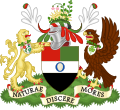 Linnean Society of London Coat of Arms
.jpg)


