Mammoth: Difference between revisions
CSV import |
CSV import |
||
| Line 24: | Line 24: | ||
[[Category:Pleistocene megafauna]] | [[Category:Pleistocene megafauna]] | ||
{{Paleontology-stub}} | {{Paleontology-stub}} | ||
<gallery> | |||
File:Mammuthus columbi Page.jpg|Mammoth | |||
File:BlankMastodon.jpg|Mammoth | |||
File:Gomphotherium NT small.jpg|Mammoth | |||
File:Stegodon ganesaDB.jpg|Mammoth | |||
File:Elephas africanus - 1700-1880 - Print - Iconographia Zoologica - (white background).jpg|Mammoth | |||
File:Palaeoloxodon namadicus-bpk (cropped).jpg|Mammoth | |||
File:Indian elephant white background.jpg|Mammoth | |||
File:Mammuthus trogontherii122DB.jpg|Mammoth | |||
File:Mammuthus sp. sectioned upper and lower molars 1.jpg|Mammoth | |||
File:Mammuthus meridionalis molar - Cleveland Museum of Natural History - 2014-12-26 (20267609313).jpg|Mammoth | |||
File:Woolly mammoth molar - Cleveland Museum of Natural History - 2014-12-26 (20859260938).jpg|Mammoth | |||
File:Woolly mammoth model Royal BC Museum in Victoria.jpg|Mammoth | |||
</gallery> | |||
Latest revision as of 01:49, 20 February 2025


.jpg)
.jpg)
Mammoth refers to the extinct members of the genus Mammuthus, proboscideans commonly equipped with long, curved tusks and, in northern species, a covering of long hair. They lived from the Pliocene epoch (from around 5 million years ago) into the Holocene at about 4,000 years ago, with the last known species to have survived being the Woolly Mammoth (Mammuthus primigenius).
Evolution and Description[edit]
Mammoths are members of the order Proboscidea, which also includes living elephants and their relatives. They evolved in Africa from the family Elephantidae, which also contains the two genera of modern elephants, Loxodonta (African elephants) and Elephas (Asian elephants). The earliest known proboscideans, the clade that contains the elephants, existed about 55 million years ago around the Tethys Sea area. The divergence from the ancestors of the elephant genus Elephas led to the appearance of the first mammoths in the African continent in the Pliocene.
The mammoth moved out of Africa and spread across northern Eurasia and North America. They were well adapted to the cold environment during the last ice age, which is evident from the discovery of frozen carcasses in Siberia and the presence of adaptations like a hump of fat for insulation and long fur.
Species[edit]
There were several species of mammoth, each adapted to its environment. The most famous species, the Woolly Mammoth, was not the largest; that title goes to the Imperial Mammoth (Mammuthus imperator) of North America. Other notable species include the Steppe Mammoth (Mammuthus trogontherii), which preceded the woolly mammoth, and the Columbian Mammoth (Mammuthus columbi), which inhabited forests and grasslands in North America.
Extinction[edit]
The exact reasons for the mammoth's extinction are still debated among scientists. It is generally believed that a combination of climate change at the end of the last Ice Age and overhunting by early humans played significant roles. The last population of woolly mammoths lived on Wrangel Island in the Arctic Ocean until 4,000 years ago.
In Culture[edit]
Mammoths have a prominent place in human culture, symbolizing the ice age and extinct megafauna. They are often featured in literature, art, and films. Additionally, the possibility of de-extincting mammoths through cloning or genetic engineering has been explored in scientific circles, raising ethical, ecological, and practical questions.
See Also[edit]

This article is a paleontology stub. You can help WikiMD by expanding it!
-
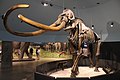 Mammoth
 -
 Mammoth
 -
 Mammoth
 -
 Mammoth
 -
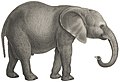 Mammoth
 -
 Mammoth
 -
 Mammoth
 -
 Mammoth
 -
 Mammoth
 -
 Mammoth
 -
 Mammoth
 -
 Mammoth


.jpg)
.jpg)

