Death and culture: Difference between revisions
CSV import Tag: Manual revert |
CSV import Tags: mobile edit mobile web edit |
||
| Line 29: | Line 29: | ||
[[Category:Culture]] | [[Category:Culture]] | ||
{{culture-stub}} | {{culture-stub}} | ||
<gallery> | |||
File:Allisvanity.jpg|Death and culture | |||
File:Horse-drawn_funeral_hearse_1900.jpg|Death and culture | |||
File:Evstafiev-bosnia-sarajevo-funeral-reaction.jpg|Death and culture | |||
File:Goya_War3.jpg|Death and culture | |||
File:DeadJapaneseGuam1944.jpg|Death and culture | |||
File:Japanesesuicide.jpg|Death and culture | |||
File:Jan_Hus_at_the_Stake.jpg|Death and culture | |||
File:Codex_Magliabechiano_(141_cropped).jpg|Death and culture | |||
File:Paradiso_Canto_31_(no_caption).jpg|Death and culture | |||
File:afghan_graveyard.jpg|Death and culture | |||
File:Cholera.jpg|Death and culture | |||
File:The_Triumph_of_Death_by_Pieter_Bruegel_the_Elder.jpg|Death and culture | |||
</gallery> | |||
Latest revision as of 12:08, 18 February 2025
Death and Culture refers to the various ways in which cultures around the world perceive and deal with death, a universal human experience. The customs, rituals, and beliefs surrounding death are as diverse as the cultures themselves, reflecting deep philosophical and religious views on the nature of life, the afterlife, and the significance of mortality.
Overview[edit]
Death is a significant event in human societies, often accompanied by rituals and ceremonies designed to honor the deceased, comfort the living, and ensure a smooth transition to the afterlife, according to the specific cultural or religious beliefs. These practices can include funerals, memorial services, and various mourning customs.
Cultural Perspectives[edit]
Western Cultures[edit]
In many Western cultures, death is often associated with fear and avoidance, a perspective sometimes referred to as "death denial." This attitude can influence the way death is approached and discussed, with a focus on medical intervention to prolong life. However, there is also a growing movement towards accepting death as a natural part of life, exemplified by discussions around palliative care, hospice care, and advance directives.
Eastern Cultures[edit]
In contrast, many Eastern cultures have a more integrated view of death, seeing it as a natural, inseparable part of life. For example, in Buddhism, the concept of reincarnation suggests that death is not the end but a transition to a new beginning. Similarly, Hindu traditions involve elaborate rituals to ensure the deceased's soul is peacefully transitioned to the next life.
Indigenous Cultures[edit]
Indigenous cultures often have unique perspectives on death that are deeply intertwined with their connection to nature and ancestral heritage. For instance, some Native American tribes practice sky burials, where the deceased is exposed to the elements and animals, signifying a return to the earth.
Rituals and Practices[edit]
The rituals surrounding death, from the preparation of the body to the mourning practices, vary widely among cultures. In Islam, the deceased is bathed and wrapped in a simple white cloth before burial. In contrast, Tibetan Buddhism practices sky burials, where the body is left on a mountaintop to decompose naturally or to be consumed by birds of prey.
Mourning and Grief[edit]
Mourning practices also differ significantly across cultures. In some societies, mourning is expressed through loud, public displays of grief, while in others, it is a more subdued and private affair. The duration of mourning periods and the specific customs, such as wearing certain colors or avoiding specific activities, can vary widely.
Cemeteries and Memorials[edit]
The ways in which the dead are commemorated also vary, with practices ranging from elaborate tombstones in cemeteries to more personal memorials. Some cultures prefer cremation and the scattering of ashes, while others opt for burial in family plots or crypts.
Conclusion[edit]
The cultural practices surrounding death reflect the diverse ways in which societies understand and cope with the end of life. These traditions provide comfort to the living, honor the deceased, and offer insights into the values and beliefs of the culture.

-
 Death and culture
 -
 Death and culture
 -
 Death and culture
 -
 Death and culture
 -
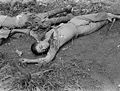 Death and culture
 -
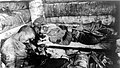 Death and culture
 -
 Death and culture
 -
 Death and culture
 -
 Death and culture
 -
 Death and culture
 -
 Death and culture
 -
 Death and culture


.jpg)
.jpg)


