Utility submeter: Difference between revisions
CSV import Tags: mobile edit mobile web edit |
CSV import Tags: mobile edit mobile web edit |
||
| (One intermediate revision by the same user not shown) | |||
| Line 1: | Line 1: | ||
== Utility Submeter == | |||
A '''utility submeter''' is a device used to measure the consumption of utilities such as electricity, water, or gas in individual units within a larger complex, such as an apartment building or a [[trailer park]]. This allows for more accurate billing based on actual usage rather than estimates or averages. | |||
[[File:Trailerpark.jpg|thumb|A trailer park where utility submeters might be used.]] | |||
== Types of Utility Submeters == | |||
Utility submeters can be categorized based on the type of utility they measure: | |||
=== Electric Submeters === | |||
[[File:Electric_submeter.jpg|thumb|An electric submeter.]] | |||
Electric submeters are used to measure the electricity consumption of individual units. They are often installed in multi-tenant buildings to allocate electricity costs fairly among tenants based on their actual usage. | |||
== | === Water Submeters === | ||
[[Category: | [[File:Water_meter_2006.jpg|thumb|A water submeter.]] | ||
Water submeters measure the water usage of individual units. This is particularly useful in residential complexes where water usage can vary significantly between units. | |||
=== Gas Submeters === | |||
[[File:Gas_meter.jpg|thumb|A gas submeter.]] | |||
Gas submeters are used to measure the gas consumption of individual units. They help in billing tenants accurately for their gas usage. | |||
== Benefits of Utility Submetering == | |||
Utility submetering offers several benefits: | |||
* '''Accurate Billing''': Tenants are billed based on their actual consumption, which promotes fairness and accountability. | |||
* '''Conservation Incentives''': When tenants are aware of their consumption, they are more likely to conserve resources, leading to reduced utility costs and environmental benefits. | |||
* '''Cost Recovery''': Property owners can recover utility costs more effectively, as they are able to charge tenants directly for their usage. | |||
== Installation and Maintenance == | |||
The installation of utility submeters requires careful planning and compliance with local regulations. Maintenance involves regular calibration and inspection to ensure accuracy and reliability. | |||
== Challenges == | |||
Some challenges associated with utility submetering include: | |||
* '''Initial Costs''': The installation of submeters can be costly, although this is often offset by the long-term savings. | |||
* '''Regulatory Compliance''': Different regions have varying regulations regarding submetering, which can complicate implementation. | |||
== Related Pages == | |||
* [[Electricity meter]] | |||
* [[Water meter]] | |||
* [[Gas meter]] | |||
== References == | |||
{{Reflist}} | |||
[[Category:Utility meters]] | |||
[[Category:Energy conservation]] | [[Category:Energy conservation]] | ||
<gallery> | |||
File:Trailerpark.jpg|Utility submeter | |||
File:Water_meter_2006.jpg|Water meter from 2006 | |||
File:Electric_submeter.jpg|Electric submeter | |||
File:Gas_meter.jpg|Gas meter | |||
File:Electrical_meter.jpg|Electrical meter | |||
</gallery> | |||
Latest revision as of 04:32, 18 February 2025
Utility Submeter[edit]
A utility submeter is a device used to measure the consumption of utilities such as electricity, water, or gas in individual units within a larger complex, such as an apartment building or a trailer park. This allows for more accurate billing based on actual usage rather than estimates or averages.

Types of Utility Submeters[edit]
Utility submeters can be categorized based on the type of utility they measure:
Electric Submeters[edit]

Electric submeters are used to measure the electricity consumption of individual units. They are often installed in multi-tenant buildings to allocate electricity costs fairly among tenants based on their actual usage.
Water Submeters[edit]

Water submeters measure the water usage of individual units. This is particularly useful in residential complexes where water usage can vary significantly between units.
Gas Submeters[edit]

Gas submeters are used to measure the gas consumption of individual units. They help in billing tenants accurately for their gas usage.
Benefits of Utility Submetering[edit]
Utility submetering offers several benefits:
- Accurate Billing: Tenants are billed based on their actual consumption, which promotes fairness and accountability.
- Conservation Incentives: When tenants are aware of their consumption, they are more likely to conserve resources, leading to reduced utility costs and environmental benefits.
- Cost Recovery: Property owners can recover utility costs more effectively, as they are able to charge tenants directly for their usage.
Installation and Maintenance[edit]
The installation of utility submeters requires careful planning and compliance with local regulations. Maintenance involves regular calibration and inspection to ensure accuracy and reliability.
Challenges[edit]
Some challenges associated with utility submetering include:
- Initial Costs: The installation of submeters can be costly, although this is often offset by the long-term savings.
- Regulatory Compliance: Different regions have varying regulations regarding submetering, which can complicate implementation.
Related Pages[edit]
References[edit]
<references group="" responsive="1"></references>
-
 Utility submeter
 -
 Water meter from 2006
 -
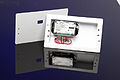 Electric submeter
 -
 Gas meter
 -
 Electrical meter

