Earth oven: Difference between revisions
CSV import Tags: mobile edit mobile web edit |
CSV import |
||
| Line 18: | Line 18: | ||
[[Category:Traditional food]] | [[Category:Traditional food]] | ||
{{food-stub}} | {{food-stub}} | ||
<gallery> | |||
File:Samoa_umu.JPG|Traditional Samoan umu | |||
File:Lovo.jpg|Fijian lovo | |||
File:Ad-hoc_earth_oven_in_Zhuhai_dllu.jpg|Ad-hoc earth oven in Zhuhai | |||
File:Maori_earth_oven.svg|Maori earth oven | |||
File:Pig_on_the_Samoan_Umu.jpg|Pig on the Samoan umu | |||
File:Preparing_Hawaiian_imu,_to_cook_pig_overnight,_on_Oahu,_Hawaii.jpg|Preparing Hawaiian imu to cook pig overnight | |||
</gallery> | |||
Latest revision as of 11:10, 18 February 2025
Earth oven is a traditional cooking method that utilizes the heat retained in the ground to cook food. This ancient technique has been used by various cultures around the world for thousands of years and is known by many names, including ground oven, pit oven, and in specific cultures, umu in Polynesia, lovo in Fiji, hangi in New Zealand, and pachamanca in Peru, among others. Earth ovens are celebrated for their ability to cook large quantities of food, often for communal meals and ceremonies, imparting a unique flavor that is difficult to replicate with modern cooking methods.
Construction and Use[edit]
The construction of an earth oven involves digging a pit in the ground and then heating it with hot stones or coals. Once the pit is sufficiently heated, the food, which can range from meats, vegetables, to doughs, is placed inside, sometimes wrapped in leaves or placed in containers that can withstand the heat. The pit is then covered with soil or more leaves, trapping the heat inside and allowing the food to cook over several hours.
The specific materials and methods used can vary greatly depending on the region and the cultural traditions. For example, in the Pacific Islands, the use of banana leaves is common for wrapping food, while in the American Southwest, agave leaves might be used.
Cultural Significance[edit]
The use of earth ovens is deeply embedded in the cultural traditions of many societies. They are often used during significant events and gatherings, symbolizing not only a method of cooking but also a form of social bonding and communal effort. The preparation of the oven and the cooking process itself are typically communal activities, with knowledge and traditions passed down through generations.
Advantages and Disadvantages[edit]
One of the main advantages of earth ovens is their ability to cook large amounts of food efficiently, making them ideal for communal meals and celebrations. The slow cooking process is also known to tenderize meat and allow flavors to develop more fully. However, there are some disadvantages, including the time and labor required to prepare and use an earth oven, as well as the potential for uneven cooking if not managed correctly.
Modern Use[edit]
While less common in the modern world, earth ovens are still used in many cultures for traditional ceremonies and events. They have also seen a resurgence in interest among culinary enthusiasts and those looking to explore ancient cooking methods and flavors.

-
 Traditional Samoan umu
 -
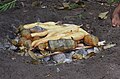 Fijian lovo
 -
 Ad-hoc earth oven in Zhuhai
 -
 Maori earth oven
 -
 Pig on the Samoan umu
 -
 Preparing Hawaiian imu to cook pig overnight


