Miraculous births: Difference between revisions
CSV import |
CSV import |
||
| (One intermediate revision by the same user not shown) | |||
| Line 29: | Line 29: | ||
[[Category:Religion]] | [[Category:Religion]] | ||
{{myth-stub}} | {{myth-stub}} | ||
{{NoIndexOrphaned}} | |||
<gallery> | |||
File:GuidoReniAnnunciation.jpg|Annunciation | |||
File:Abydos Tempelrelief Sethos I. 36.JPG|Abydos Temple Relief | |||
File:Abraham renvoyant Agar.jpg|Abraham Sending Hagar Away | |||
File:René-Antoine Houasse - Minerva.jpg|Minerva | |||
File:MithrasIMG 5339.JPG|Mithras | |||
File:Danae gold shower Louvre CA925.jpg|Danaë and the Shower of Gold | |||
File:Mignard - The Shepherd Faustulus Bringing Romulus and Remus to His Wife.jpg|The Shepherd Faustulus Bringing Romulus and Remus to His Wife | |||
File:Astasahasrika Prajnaparamita Queen Maya Birth.jpeg|Queen Maya's Birth | |||
File:Iconnativity.jpg|Nativity Icon | |||
File:Virgin Mary and Jesus (old Persian miniature).jpg|Virgin Mary and Jesus | |||
</gallery> | |||
Latest revision as of 01:34, 20 February 2025
Miraculous births refer to the birth of individuals who are considered extraordinary or have been brought into the world through supernatural, divine, or otherwise inexplicable means. These stories are found across various cultures, religions, and mythologies, often serving to highlight the significance of the individual's life and mission. Miraculous births can involve unique phenomena such as virgin births, conception through divine intervention, or births that are foretold by prophecy.
Overview[edit]
Miraculous births often signify the beginning of a new era or the introduction of a pivotal figure in a religious or mythological narrative. These events are typically surrounded by supernatural occurrences, which not only set the individual apart from ordinary humans but also underscore their destined path and the extraordinary qualities they possess.
Virgin Birth[edit]
One of the most widely recognized forms of miraculous birth is the virgin birth, where the mother conceives without the involvement of a male partner. The most famous example of this is the birth of Jesus Christ in Christianity, as described in the New Testament, where Mary conceives Jesus through the Holy Spirit.
Divine Intervention[edit]
Another common theme is conception through divine intervention, where a deity directly causes the pregnancy. This can be seen in various mythologies, such as the birth of Hercules in Greek mythology, where Zeus is said to have impregnated Alcmene.
Prophecy and Omens[edit]
Many miraculous births are accompanied by prophecies or omens, predicting the significant role the child will play in the future. For instance, the birth of Siddhartha Gautama, who would become the Buddha, was foretold by a prophecy that he would either become a great king or a spiritual leader.
Examples in Different Cultures[edit]
Miraculous births are not limited to any single culture or religion. They appear in a wide array of narratives worldwide, each adding its unique elements and significance to the concept.
- In Hinduism, Lord Krishna's birth is miraculous, as he was conceived without a sexual union and was transferred to his foster parents' womb by divine means.
- In ancient Egyptian mythology, the birth of Horus is considered miraculous, as he was posthumously conceived by Isis with Osiris.
- The Aztec god Quetzalcoatl is said to have been born to a virgin mother, Chimalman, through the intervention of the god Onteol.
Significance[edit]
Miraculous births often serve to emphasize the divine or exceptional nature of the individual's character and mission. They can symbolize purity, divine approval, or the fulfillment of a prophecy. These narratives also play a crucial role in the religious or mythological framework, providing a foundational story that supports the belief system and values of the culture.
Controversies and Interpretations[edit]
The concept of miraculous births has been subject to various interpretations and controversies, especially in the modern era. Skeptics and scholars may view these stories as symbolic or allegorical, rather than literal historical events. In religious contexts, however, they are often seen as matters of faith and are integral to the spiritual narrative.

-
 Annunciation
 -
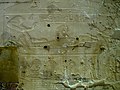 Abydos Temple Relief
 -
 Abraham Sending Hagar Away
 -
 Minerva
 -
 Mithras
 -
 Danaë and the Shower of Gold
 -
 The Shepherd Faustulus Bringing Romulus and Remus to His Wife
 -
 Queen Maya's Birth
 -
 Nativity Icon
 -
 Virgin Mary and Jesus


.jpg)
