International Vaccine Institute: Difference between revisions
CSV import Tags: mobile edit mobile web edit |
CSV import |
||
| Line 30: | Line 30: | ||
[[Category:Non-Profit Organizations]] | [[Category:Non-Profit Organizations]] | ||
{{medicine-stub}} | {{medicine-stub}} | ||
<gallery> | |||
File:International_Vaccine_Institute_logo.svg|International Vaccine Institute Logo | |||
File:Establishment_Agreement_Signing.jpg|Establishment Agreement Signing | |||
File:IVI_Building_(1).jpg|IVI Building | |||
</gallery> | |||
Latest revision as of 04:04, 18 February 2025
International Vaccine Institute (IVI) is an international organization dedicated to vaccine research and development with the aim of improving global health by discovering, developing, and delivering safe, effective, and affordable vaccines for the world's most underserved populations. Established in 1997, the IVI operates under a treaty signed by 40 countries and the World Health Organization (WHO). It is headquartered in Seoul, South Korea.
History[edit]
The IVI was founded following the recommendations of the Children's Vaccine Initiative, a global effort to accelerate the development and availability of vaccines for children in the developing world. The initiative recognized the need for an international organization to spearhead vaccine research and development efforts, leading to the establishment of the IVI.
Mission and Goals[edit]
The mission of the IVI is to combat infectious diseases affecting the world's poorest communities by developing safe, effective, and affordable vaccines. Its goals include conducting research to develop new vaccines, improving existing vaccines, and promoting the use of vaccines through policy advocacy and capacity building in developing countries.
Research and Development[edit]
The IVI's research and development activities focus on vaccines against diseases that are prevalent in developing countries but have been neglected by commercial vaccine developers. These include diseases such as cholera, typhoid fever, dengue fever, and zika virus. The institute employs a comprehensive approach, working on all stages of vaccine development from discovery and preclinical studies to clinical trials and licensure.
Partnerships[edit]
A key to the IVI's success is its collaboration with international partners, including governments, public health organizations, academic institutions, and the pharmaceutical industry. These partnerships enable the IVI to leverage resources and expertise from around the world to advance its vaccine development projects.
Impact[edit]
The IVI has made significant contributions to global health through its vaccine development efforts. For example, it has played a crucial role in the development and dissemination of a new cholera vaccine, which has been used in outbreak response and preventive campaigns in several countries. The institute's work has helped to reduce the burden of vaccine-preventable diseases in some of the world's most vulnerable populations.
Challenges and Future Directions[edit]
Despite its achievements, the IVI faces ongoing challenges, including securing sustainable funding, navigating regulatory hurdles, and ensuring the accessibility of its vaccines in low-resource settings. Looking forward, the institute aims to expand its vaccine portfolio, strengthen its partnerships, and continue to advocate for the importance of vaccines in global health.
See Also[edit]

-
International Vaccine Institute Logo
-
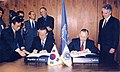 Establishment Agreement Signing
 -
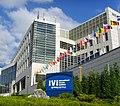 IVI Building

.jpg)

