Ishinpō: Difference between revisions
CSV import Tags: mobile edit mobile web edit |
CSV import |
||
| Line 18: | Line 18: | ||
{{medicine-stub}} | {{medicine-stub}} | ||
<gallery> | |||
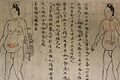
File:Isinnhou.jpg|Ishinpō | |||
</gallery> | |||
Latest revision as of 01:42, 20 February 2025
Ishinpō (醫心方), written in 984, is the oldest surviving Japanese medical text. Compiled by Tamba Yasuyori, a 10th-century Japanese physician, the Ishinpō is a comprehensive compilation of medical knowledge and practices of its time, drawing from a variety of Chinese sources as well as incorporating original Japanese contributions. The text is significant not only for its historical value but also for its insights into the medical practices and beliefs of the Heian period in Japan.
Composition and Structure[edit]
The Ishinpō is divided into 30 volumes, covering a wide range of medical topics. These volumes are organized into sections that include general medicine, acupuncture, moxibustion, pharmacology, sexual health, obstetrics, and pediatrics, among others. One of the notable features of the Ishinpō is its detailed descriptions of acupuncture points and herbal formulas, which reflect the influence of Chinese medical texts such as the Huangdi Neijing (Yellow Emperor's Inner Canon) and the Shanghan Lun (Treatise on Cold Damage Disorders).
Historical Context[edit]
During the Heian period (794-1185), Japan was significantly influenced by Chinese culture and knowledge, including medicine. The compilation of the Ishinpō represents a pivotal moment in the history of Japanese medicine, as it signifies the adaptation and integration of Chinese medical practices with indigenous Japanese approaches. Tamba Yasuyori, the author, hailed from a lineage of physicians, and his work on the Ishinpō was a monumental effort to preserve and systematize medical knowledge for future generations.
Legacy and Impact[edit]
The Ishinpō's impact on Japanese medicine cannot be overstated. It served as a primary medical text for centuries, influencing the development of Japanese medical theory and practice. The text is also a valuable resource for understanding the medical history of Japan and the broader East Asian region. Its descriptions of diseases, treatments, and pharmaceutical preparations provide insight into the health concerns and medical interventions of the time.
Preservation and Study[edit]
The original manuscripts of the Ishinpō have not survived, but the text has been preserved through various copies made over the centuries. Today, the Ishinpō is studied not only for its medical content but also for its linguistic, historical, and cultural significance. It is considered a crucial work in the field of pre-modern Japanese studies and the history of medicine.

-
 Ishinpō

