Ferruginol: Difference between revisions
CSV import Tags: mobile edit mobile web edit |
CSV import Tags: mobile edit mobile web edit |
||
| Line 27: | Line 27: | ||
[[Category:Natural products]] | [[Category:Natural products]] | ||
{{chemistry-stub}} | {{chemistry-stub}} | ||
<gallery> | |||
File:Ferruginol_ms_-edit.jpg|Ferruginol molecular structure | |||
File:Ferruginol_case_study-_edited_(1).jpg|Ferruginol case study | |||
</gallery> | |||
Latest revision as of 00:58, 18 February 2025

Ferruginol is a natural phenolic compound found in various species of plants, notably within the family Lamiaceae, which includes the genera Scutellaria and Teucrium. It is a diterpene characterized by its unique structure, consisting of a phenolic abietane framework. This compound has attracted interest due to its diverse range of biological activities, including antimicrobial, antifungal, and anticancer properties.
Chemical Properties[edit]
Ferruginol has the chemical formula C_20H_30O_2 and is known for its red crystalline solid appearance at room temperature. It is poorly soluble in water but readily dissolves in organic solvents such as ethanol and chloroform. The compound's structure includes a phenolic hydroxyl group, which is responsible for its antioxidant activity.
Biosynthesis[edit]
The biosynthesis of ferruginol in plants involves the cyclization of geranylgeranyl pyrophosphate (GGPP) to form the abietane skeleton, which is then modified by various enzymatic reactions to introduce the phenolic functional group. This biosynthetic pathway is part of the larger terpenoid synthesis process, which plays a crucial role in plant defense mechanisms.
Biological Activities[edit]
Ferruginol has been studied for its potential health benefits, including its antimicrobial activity against a broad spectrum of bacteria and fungi. It has shown promise in inhibiting the growth of pathogenic organisms such as Staphylococcus aureus and Candida albicans. Additionally, its anticancer activity has been explored, with studies indicating its ability to induce apoptosis in certain cancer cell lines.
Antimicrobial Activity[edit]
The antimicrobial properties of ferruginol are attributed to its ability to disrupt microbial cell membranes, leading to cell death. This mechanism is particularly effective against gram-positive bacteria and various fungal species.
Anticancer Activity[edit]
Ferruginol's anticancer effects are believed to be due to its pro-oxidant activity, inducing oxidative stress in cancer cells, which can lead to cell cycle arrest and apoptosis. Its selectivity towards cancer cells over normal cells makes it a compound of interest for further research in cancer therapy.
Ecological Role[edit]
In nature, ferruginol serves as a defensive compound for plants against herbivores and pathogens. Its bitter taste and toxic properties deter feeding, while its antimicrobial activity protects plants from microbial infection.
Potential Applications[edit]
Given its biological activities, ferruginol has potential applications in the development of new antimicrobial and anticancer agents. However, further research is needed to fully understand its mechanisms of action and to assess its safety and efficacy in humans.

-
 Ferruginol molecular structure
 -
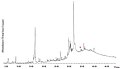 Ferruginol case study

.jpg)
