Health in Uganda: Difference between revisions
CSV import Tags: mobile edit mobile web edit |
CSV import |
||
| Line 26: | Line 26: | ||
{{Africa-stub}} | {{Africa-stub}} | ||
<gallery> | |||
File:Patients at Apac hospital.png|Patients at Apac hospital | |||
File:Life expectancy chart for Uganda, OWID.png|Life expectancy chart for Uganda | |||
File:Ugandan health delivery.jpg|Ugandan health delivery | |||
File:Nyakabanda Transit Center - For Congolese Refugees - Outside Kisoro - Southwestern Uganda - 04.jpg|Nyakabanda Transit Center - For Congolese Refugees | |||
File:Refugees in Bambasi Refugee Camp.jpg|Refugees in Bambasi Refugee Camp | |||
File:Sewage ponds of Katete in Mbarara in western Uganda 08.jpg|Sewage ponds of Katete in Mbarara | |||
File:Poor garbage disposal in Kyarushozi town in Kyenjojo district in western Uganda 02.jpg|Poor garbage disposal in Kyarushozi town | |||
</gallery> | |||
Latest revision as of 01:45, 20 February 2025

Health in Uganda refers to the overall state of healthcare and health outcomes in the East African nation of Uganda. The country has faced numerous health challenges over the years, including infectious diseases, maternal and child health issues, and a growing burden of non-communicable diseases. Efforts to improve health in Uganda involve a combination of government initiatives, international aid, and work by non-governmental organizations (NGOs).
Healthcare System[edit]
The healthcare system in Uganda is structured in a tiered format, with services provided at the national, district, and community levels. The Ministry of Health oversees the national healthcare policy and implementation. Healthcare facilities range from large referral hospitals in urban centers to rural health clinics and community health workers providing basic care and health education at the village level.
Challenges[edit]
The Ugandan healthcare system faces several challenges, including limited resources, a shortage of healthcare professionals, and accessibility issues, particularly in rural areas. Financial constraints and infrastructure deficits further complicate the delivery of effective healthcare services.
Infectious Diseases[edit]
Infectious diseases have historically been a major health concern in Uganda. HIV/AIDS remains a significant public health issue, although concerted efforts in education, testing, and treatment have led to a decline in new infections and deaths related to the disease. Malaria is another leading cause of morbidity and mortality, with comprehensive strategies including the distribution of insecticide-treated nets and indoor residual spraying being employed to combat the disease. Tuberculosis and neglected tropical diseases also pose ongoing challenges.
Maternal and Child Health[edit]
Improving maternal and child health is a key focus for Uganda, with initiatives aimed at reducing maternal and infant mortality rates. Challenges include ensuring access to skilled birth attendants, emergency obstetric care, and neonatal services. Malnutrition and undernutrition remain prevalent among children, affecting growth and development.
Non-communicable Diseases[edit]
The burden of non-communicable diseases (NCDs) such as cardiovascular diseases, diabetes, and cancers is rising in Uganda. This shift reflects changing lifestyles, urbanization, and increased life expectancy. Efforts to address NCDs include promoting healthy lifestyles, improving disease detection, and enhancing treatment options.
Health Initiatives and Programs[edit]
Uganda has implemented various health initiatives and programs, often in partnership with international organizations. These include vaccination campaigns, health education programs, and initiatives to improve water, sanitation, and hygiene (WASH). The Global Fund to Fight AIDS, Tuberculosis and Malaria, the World Health Organization, and other partners play a significant role in supporting Uganda's health sector.
Conclusion[edit]
While Uganda has made progress in improving health outcomes, significant challenges remain. Strengthening the healthcare system, addressing the determinants of health, and ensuring equitable access to health services are crucial for further advancements in health in Uganda.

-
 Patients at Apac hospital
 -
 Life expectancy chart for Uganda
 -
 Ugandan health delivery
 -
 Nyakabanda Transit Center - For Congolese Refugees
 -
 Refugees in Bambasi Refugee Camp
 -
 Sewage ponds of Katete in Mbarara
 -
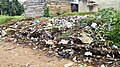 Poor garbage disposal in Kyarushozi town


