Interleukin-3 receptor: Difference between revisions
CSV import Tags: mobile edit mobile web edit |
CSV import |
||
| (One intermediate revision by the same user not shown) | |||
| Line 18: | Line 18: | ||
{{Immunology-stub}} | {{Immunology-stub}} | ||
{{Cell-biology-stub}} | {{Cell-biology-stub}} | ||
{{nt}} | |||
<gallery> | |||
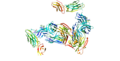
File:CD123.png|Interleukin-3 receptor | |||
</gallery> | |||
Latest revision as of 00:52, 20 February 2025
Interleukin-3 receptor (IL-3R) is a protein found on the surface of certain cells that binds to interleukin-3 (IL-3), a type of cytokine that is involved in the body's immune response. The IL-3 receptor is a critical component in the regulation of hematopoiesis, the process by which blood cells are produced in the body. It plays a significant role in the proliferation and differentiation of hematopoietic stem cells into various types of blood cells, including red blood cells, white blood cells, and platelets.
Structure[edit]
The IL-3 receptor is a heterodimer, consisting of two subunits: an alpha (α) chain and a beta (β) chain. The alpha chain, also known as IL-3Rα or CD123, is specific to the IL-3 receptor, while the beta chain, known as βc or CD131, is shared with the receptors for IL-5 and GM-CSF, indicating a common pathway for signaling and functional activity among these cytokines.
Function[edit]
Upon binding of IL-3 to its receptor, a series of intracellular signaling pathways are activated, leading to the proliferation, survival, and differentiation of target cells. These pathways include the activation of JAK2, STAT5, and the MAPK pathway, among others. The IL-3 receptor's role is particularly important in the immune system, where it supports the growth and differentiation of immune cells, contributing to the body's ability to respond to infections and diseases.
Clinical Significance[edit]
Abnormalities in the expression or function of the IL-3 receptor have been implicated in various diseases, including leukemia and other types of cancer. For instance, overexpression of the IL-3Rα chain has been observed in certain leukemias, making it a potential target for therapeutic intervention. Drugs that block the action of IL-3 or its receptor are being explored as treatments for these conditions.
Research[edit]
Research on the IL-3 receptor continues to uncover its complex role in health and disease. Studies are focused on understanding the detailed mechanisms of IL-3/IL-3R signaling and its implications for the development of new therapeutic strategies for hematological malignancies and other disorders related to the immune system.

This article is a immunology stub. You can help WikiMD by expanding it!

This article is a cell biology stub. You can help WikiMD by expanding it!
-
 Interleukin-3 receptor

