Cash crop: Difference between revisions
CSV import |
CSV import |
||
| Line 26: | Line 26: | ||
[[Category:Economy]] | [[Category:Economy]] | ||
{{Agriculture-stub}} | {{Agriculture-stub}} | ||
<gallery> | |||
File:Cotton_By_Hrushikesh_Kulkarni.jpg|Cotton plant | |||
File:Ateh_Eldeno_harvesting_coacoa.jpg|Harvesting cocoa | |||
File:Cameron_Highland_Tea_Plantation_2012.JPG|Tea plantation | |||
File:Jatropha_curcas.jpg|Jatropha curcas | |||
File:OrangeBloss_wb.jpg|Orange blossom | |||
File:Patates.jpg|Potatoes | |||
File:Cut_sugarcane.jpg|Cut sugarcane | |||
File:Yellow_Cannabis_strain.jpg|Yellow cannabis strain | |||
</gallery> | |||
Latest revision as of 11:23, 18 February 2025
Cash crop refers to a crop that is grown for the purpose of being sold on the market, rather than being used by the grower for personal consumption or for feeding livestock. These crops are primarily grown because of their commercial value and their ability to generate income for farmers. The concept of cash crops is central to commercial farming and agriculture, playing a crucial role in the economies of both developing and developed countries.
Types of Cash Crops[edit]
Cash crops can vary widely depending on the region and the market demand. Some of the most common types include:
- Cotton: Used in the textile industry, cotton is a significant cash crop in countries like the United States, India, and China.
- Coffee: One of the most traded commodities in the world, coffee is a key cash crop in countries such as Brazil, Colombia, and Vietnam.
- Tea: Similar to coffee, tea is a major cash crop in nations like China, India, and Kenya.
- Tobacco: Despite health concerns, tobacco remains a valuable cash crop in the United States, China, and Brazil.
- Sugarcane: Used to produce sugar, sugarcane is a crucial crop in countries like Brazil, India, and Thailand.
- Cocoa beans: The primary ingredient in chocolate, cocoa beans are predominantly grown in West Africa, particularly in Côte d'Ivoire and Ghana.
Economic Impact[edit]
The cultivation of cash crops has a significant impact on a country's economy. It can lead to increased Gross Domestic Product (GDP), provide employment opportunities, and contribute to a positive trade balance by exporting surplus produce. However, reliance on cash crops can also make economies vulnerable to fluctuations in global market prices and demand.
Environmental and Social Issues[edit]
The production of cash crops is not without its challenges. Intensive farming of these crops can lead to soil degradation, water pollution, and loss of biodiversity. Moreover, in some developing countries, the focus on cash crops has been linked to issues such as food security and the displacement of traditional farming practices. There is also concern about the exploitation of labor, including child labor, in the cultivation of some cash crops.
Sustainable Practices[edit]
To address these concerns, there is a growing movement towards sustainable practices in cash crop production. This includes the adoption of organic farming techniques, fair trade certification, and initiatives aimed at improving labor conditions and ensuring that farmers receive a fair price for their produce.
Conclusion[edit]
Cash crops play a vital role in the global economy, providing income for millions of farmers and contributing to the economic development of many countries. However, the cultivation of these crops must be managed carefully to ensure environmental sustainability and social equity.

This article is a agriculture stub. You can help WikiMD by expanding it!
-
 Cotton plant
 -
 Harvesting cocoa
 -
 Tea plantation
 -
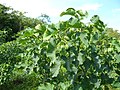 Jatropha curcas
 -
 Orange blossom
 -
 Potatoes
 -
 Cut sugarcane
 -
 Yellow cannabis strain


