Leachate: Difference between revisions
CSV import Tags: mobile edit mobile web edit |
CSV import |
||
| Line 26: | Line 26: | ||
{{Environment-stub}} | {{Environment-stub}} | ||
<gallery> | |||
File:Leachate_Pond.JPG|Leachate pond | |||
File:Leachate_processing_tanks.jpg|Leachate processing tanks | |||
File:Landfill_Leachate_Discharge_Limits_&_Typical_Composition.jpg|Landfill leachate discharge limits and typical composition | |||
File:Landfill_Leachate_Treatment_Options.jpg|Landfill leachate treatment options | |||
</gallery> | |||
Latest revision as of 04:22, 18 February 2025
Leachate is a liquid that has percolated through a solid and leached out some of the constituents. In the context of environmental science and waste management, leachate most commonly refers to the liquid that drains or 'leaches' from a landfill. The composition of leachate varies widely depending on the age of the landfill and the type of waste that it contains. It usually contains both dissolved and suspended material.
Composition[edit]
Leachate composition can be highly variable, but it generally contains high concentrations of organic compounds, ammonium, heavy metals such as iron and manganese, and inorganic ions like chloride and sulfate. The presence of these substances makes leachate a potential hazard to groundwater and surface water if not properly managed and treated.
Production and Collection[edit]
Leachate is produced as a result of precipitation entering the landfill, the inherent moisture within the waste, and the biochemical processes that occur as waste decomposes. Modern landfills are designed with leachate collection systems to prevent the leachate from contaminating the surrounding environment. These systems typically include a liner made of clay or synthetic materials and a series of pipes that collect and transport the leachate to a treatment facility.
Treatment[edit]
The treatment of leachate may involve a combination of physical, chemical, and biological processes. Common treatment methods include biological treatment, air stripping, nitrification-denitrification, reverse osmosis, and adsorption. The choice of treatment depends on the composition of the leachate and the standards that must be met for discharge.
Environmental Impact[edit]
The environmental impact of leachate can be significant if not properly managed. It can contaminate groundwater and surface water, posing a risk to aquatic life and human health. The organic and inorganic components of leachate can lead to the depletion of oxygen in water bodies and the release of greenhouse gases as it decomposes.
Regulation[edit]
In many countries, the management and treatment of leachate are regulated by environmental protection agencies. Regulations may specify the design of landfill sites, the collection and treatment of leachate, and the allowable levels of contaminants in treated leachate that is discharged to the environment.
See Also[edit]

This article is a environment-related stub. You can help WikiMD by expanding it!
-
 Leachate pond
 -
 Leachate processing tanks
 -
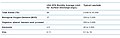 Landfill leachate discharge limits and typical composition
 -
 Landfill leachate treatment options


