Global Marijuana March: Difference between revisions
CSV import Tags: mobile edit mobile web edit |
CSV import |
||
| Line 35: | Line 35: | ||
[[Category:Annual events]] | [[Category:Annual events]] | ||
{{Activism-stub}} | {{Activism-stub}} | ||
<gallery> | |||
File:Protests_Madrid_2004_2.jpg|Global Marijuana March in Madrid, 2004 | |||
File:Marijuana_march_Rio_de_Janeiro_2014_May_10_Brazil_marcha_maconha.jpg|Marijuana March in Rio de Janeiro, 2014 | |||
File:Wien_-_Hanfwandertag_2014.JPG|Hanfwandertag in Vienna, 2014 | |||
File:Cape_Town_cannabis_march_2015_May_9.jpg|Cannabis March in Cape Town, 2015 | |||
File:Calgary,_Alberta,_Canada._May_5,_2007_Global_Marijuana_March.jpg|Global Marijuana March in Calgary, 2007 | |||
File:Chuck_Schumer_cannabis_rally_2022.jpg|Chuck Schumer at a cannabis rally, 2022 | |||
</gallery> | |||
Latest revision as of 11:30, 18 February 2025
Global Marijuana March (GMM) is an annual event held in various locations around the world. It is a rally advocating for the decriminalization and legalization of cannabis. The event is also known by other names such as the Million Marijuana March (MMM) and the World Cannabis Day. It combines political activism with cultural and social activities, aiming to create awareness and stimulate dialogue on issues related to cannabis, including its medical use, environmental benefits, and the implications of its prohibition.
History[edit]
The Global Marijuana March originated in New York City in 1999, initiated by activist Dana Beal. The purpose was to coordinate international events to protest against cannabis prohibition and promote the benefits of cannabis, including its medicinal properties. Since its inception, the GMM has grown in size and scope, with hundreds of cities participating worldwide. The event typically occurs on the first Saturday in May, bringing together a diverse group of people, including activists, medical patients, and recreational users, to advocate for change in cannabis laws.
Objectives[edit]
The primary objectives of the Global Marijuana March are to:
- Advocate for the legalization of cannabis for adult use.
- Promote the recognition of cannabis as a medicine and facilitate access for patients.
- Highlight the economic benefits of cannabis legalization, including job creation and tax revenue.
- Address social justice issues related to the war on drugs, such as the disproportionate impact on minority communities.
- Encourage the adoption of hemp as a sustainable alternative for industrial purposes.
Events and Activities[edit]
GMM events vary by location but often include marches, rallies, concerts, and educational forums. Participants may carry banners, signs, and symbols representing cannabis culture. Speakers at these events typically include activists, politicians, healthcare professionals, and individuals affected by cannabis prohibition. The gatherings also serve as a platform for sharing information about the latest research, legal developments, and advocacy strategies.
Impact[edit]
The Global Marijuana March has played a significant role in raising public awareness and influencing policy discussions on cannabis. It has helped to shift public opinion in favor of legalization and contributed to the passage of cannabis reform laws in various jurisdictions. The event also fosters a sense of community and solidarity among those who support cannabis reform, providing a space for sharing stories, experiences, and knowledge.
Controversy[edit]
While the GMM has garnered significant support, it has also faced criticism and opposition. Critics argue that the event promotes drug use and can lead to increased crime and public disorder. Some also question the efficacy of cannabis as a medicine and raise concerns about the potential health risks associated with its use.
See Also[edit]
External Links[edit]
- [Official Global Marijuana March website]

-
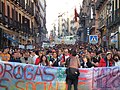 Global Marijuana March in Madrid, 2004
 -
 Marijuana March in Rio de Janeiro, 2014
 -
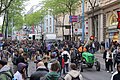 Hanfwandertag in Vienna, 2014
 -
 Cannabis March in Cape Town, 2015
 -
 Global Marijuana March in Calgary, 2007
 -
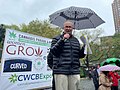 Chuck Schumer at a cannabis rally, 2022


